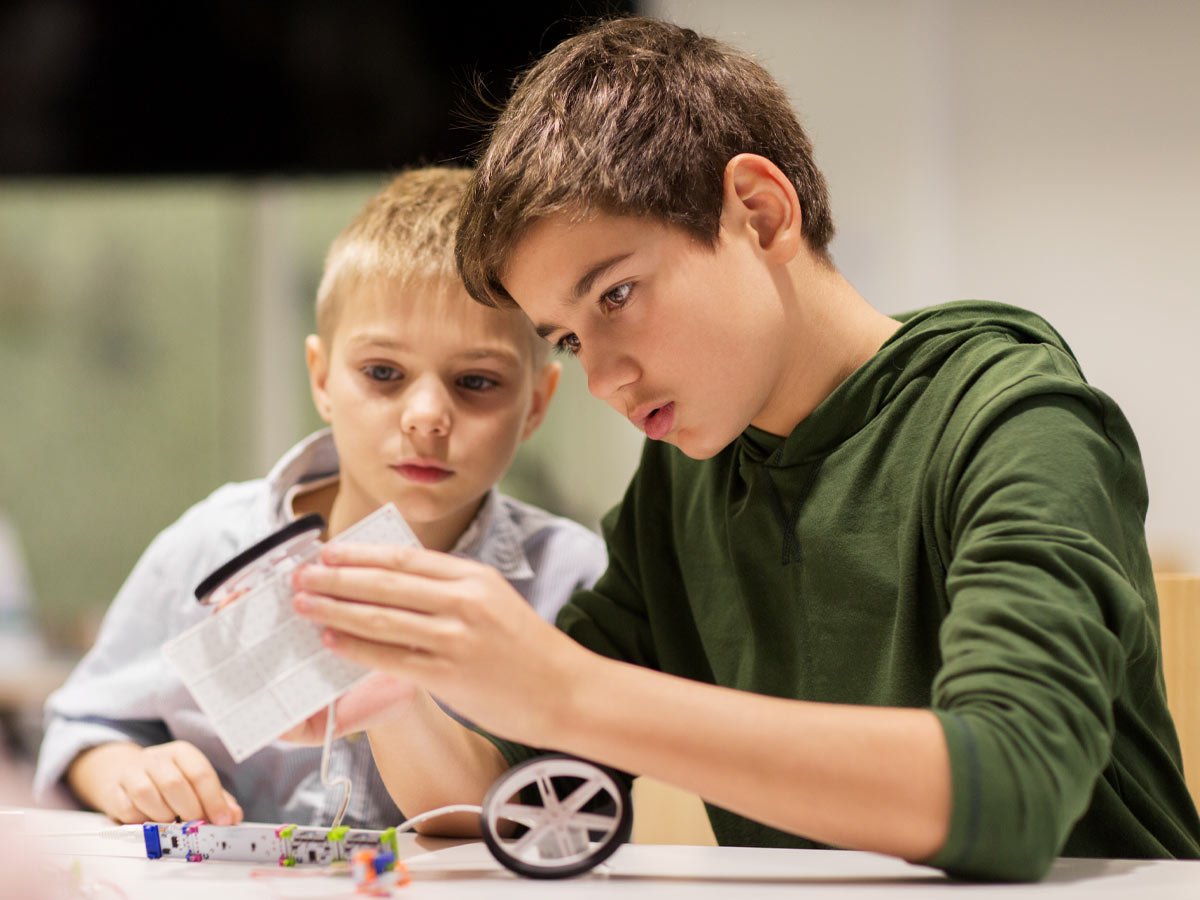
The last day of school arrives with a burst of energy — backpacks thrown down, shoes kicked off, the glorious promise of an unscheduled summer stretching out ahead. And then, somewhere around week three, you ask your rising third-grader what seven times eight is and watch them stare at you like you have asked something in a foreign language.
Welcome to the summer slide. It is real, it is well-documented, and it happens to kids at every level — not because they are not smart, but because the brain, like any muscle, loses some conditioning when it stops being used. The good news is that preventing summer learning loss does not mean turning your home into a year-round classroom or scheduling every hour of your child’s summer. It means weaving a few intentional habits into the season — and in the High Country, that is a lot easier than it might sound.
Why Summer Slide Happens — and Why It Matters
The summer slide is the learning loss that occurs when children take an extended break from academic activities. It is not a myth or an educational scare tactic. It is a phenomenon that has been studied consistently since the 1970s, and the findings are remarkably consistent across decades of research.
Studies show that students can lose the equivalent of up to two months of learning over the summer break, with the losses most pronounced in mathematics. Reading skills tend to be more durable — especially for children who read recreationally during the summer — but math computation skills, in particular, deteriorate without regular practice. Research suggests children can lose as much as 25 to 30 percent of their school-year learning over a single summer without any reinforcement.
The slide is not felt equally across all children. According to EBSCO Research, summer learning loss most significantly affects children from lower socioeconomic backgrounds, who may have less access to books, structured programs, and enriching experiences during the summer months. But even children from well-resourced families experience measurable learning loss — and the cumulative effect over multiple summers can add up to a meaningful gap by the time a child reaches middle school.
The Back-to-School Reality
Teachers know about the summer slide because they see it every September. The first weeks of each school year are often spent re-teaching and reviewing material from the previous spring — material that should be a foundation for the new year’s content. When that review takes longer than expected, the whole year shifts. Children who arrive in September with their skills reasonably intact are simply in a better position to build on what they know from day one.
The Difference Between Rust and Regression
It is worth distinguishing between normal summer rust — forgetting a formula or needing a moment to warm back up — and actual regression, where a child no longer recognizes skills they had solidly mastered. Some forgetting is normal and nothing to worry about. If your child needs a few minutes to remember how to multiply fractions, that is rust. If they cannot recall what a fraction is, that is regression — and a signal that more active reinforcement during the summer would have helped.
The goal of summer learning maintenance is not to prevent all rust. It is to prevent regression — the significant backward slide that makes September harder than it needs to be.
What Actually Works — and What Does Not
Before diving into strategies, it is worth being honest about what the research says about effectiveness. Not all summer learning approaches are created equal, and some of the most common ones parents reach for are less effective than they assume.
Worksheets and Workbooks — With Caveats
Summer workbooks are widely used and can be helpful — but only if children actually use them consistently and only if the content is appropriately challenging. A workbook that is too easy becomes busywork. One that is too hard becomes a source of frustration and avoidance. The research points consistently to three to five short sessions per week as far more effective than longer, infrequent sessions. Twenty minutes of focused practice on a Tuesday, Thursday, and Saturday does more than a two-hour Saturday marathon.
Reading — Every Day, Whatever They Choose
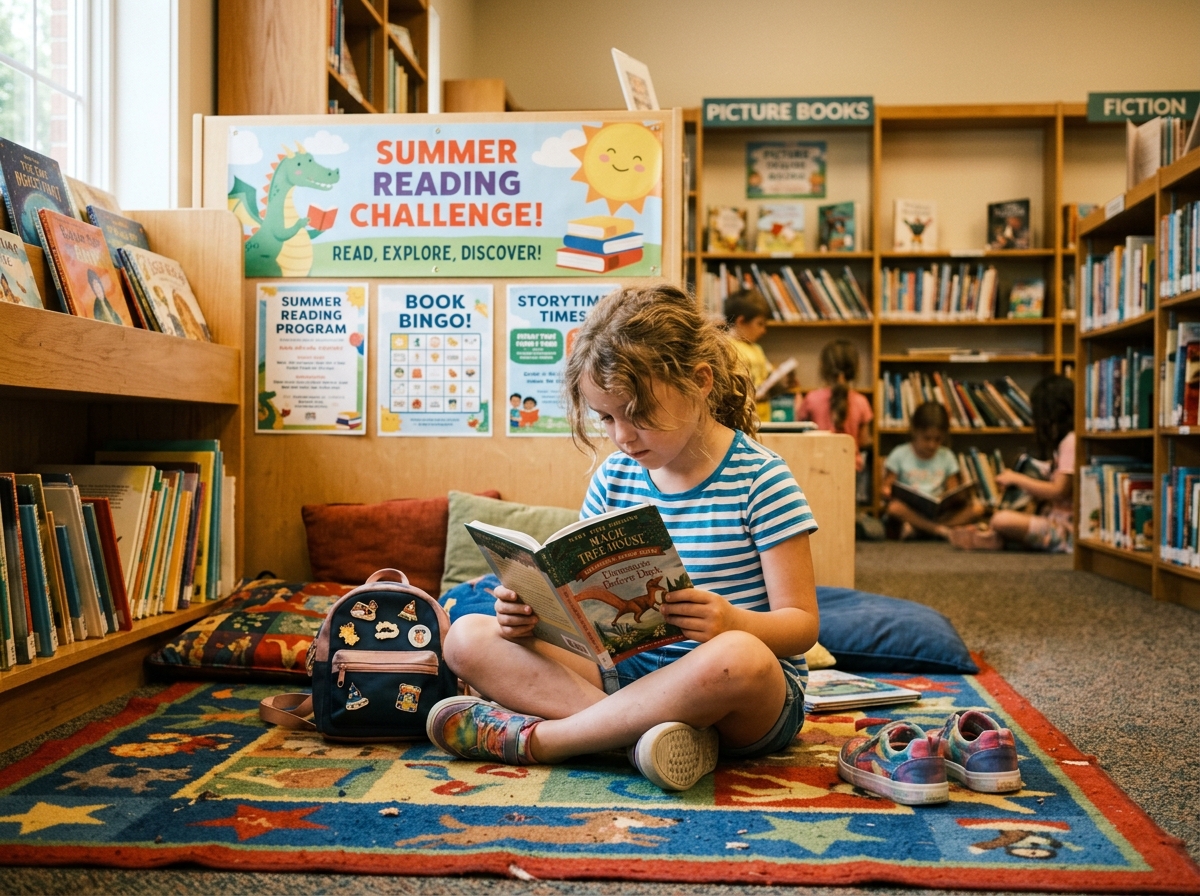
Of all the evidence-based summer learning strategies, daily reading is the most consistent and most impactful. The key word is daily — not weekly, not occasionally, but every day. It does not need to be long. Fifteen to twenty minutes of self-selected reading — books your child actually wants to read, not assigned texts — is enough to maintain and even grow reading skills over the summer.
The self-selection piece matters enormously. Children who choose their own reading material are significantly more likely to actually read and to develop a lasting relationship with books. Graphic novels, adventure series, science books, humor collections — all of it counts. What your child reads matters far less than the fact that they are reading.
Real-Life Math — Disguised as Life
Math skills are the most vulnerable to summer slide, and they are also the easiest to practice without it feeling like school. Cooking involves fractions, measurement, and multiplication. Shopping involves addition, subtraction, and percentages. Road trip planning involves distance, time, and estimation. Board games involve strategy, counting, and probability. A child who spends the summer cooking, shopping, playing games, and exploring does not need a math workbook to stay sharp — as long as parents are intentional about drawing the math connections out loud.
Use the High Country as Your Classroom
One of the genuine advantages of raising children in the High Country is the extraordinary outdoor learning environment right outside the door. The mountains, trails, farms, rivers, and community spaces around us offer hands-on learning experiences that no worksheet can replicate — and research consistently shows that experiential learning strengthens retention and builds the kind of deep understanding that formal instruction sometimes misses.
Nature as Science Education
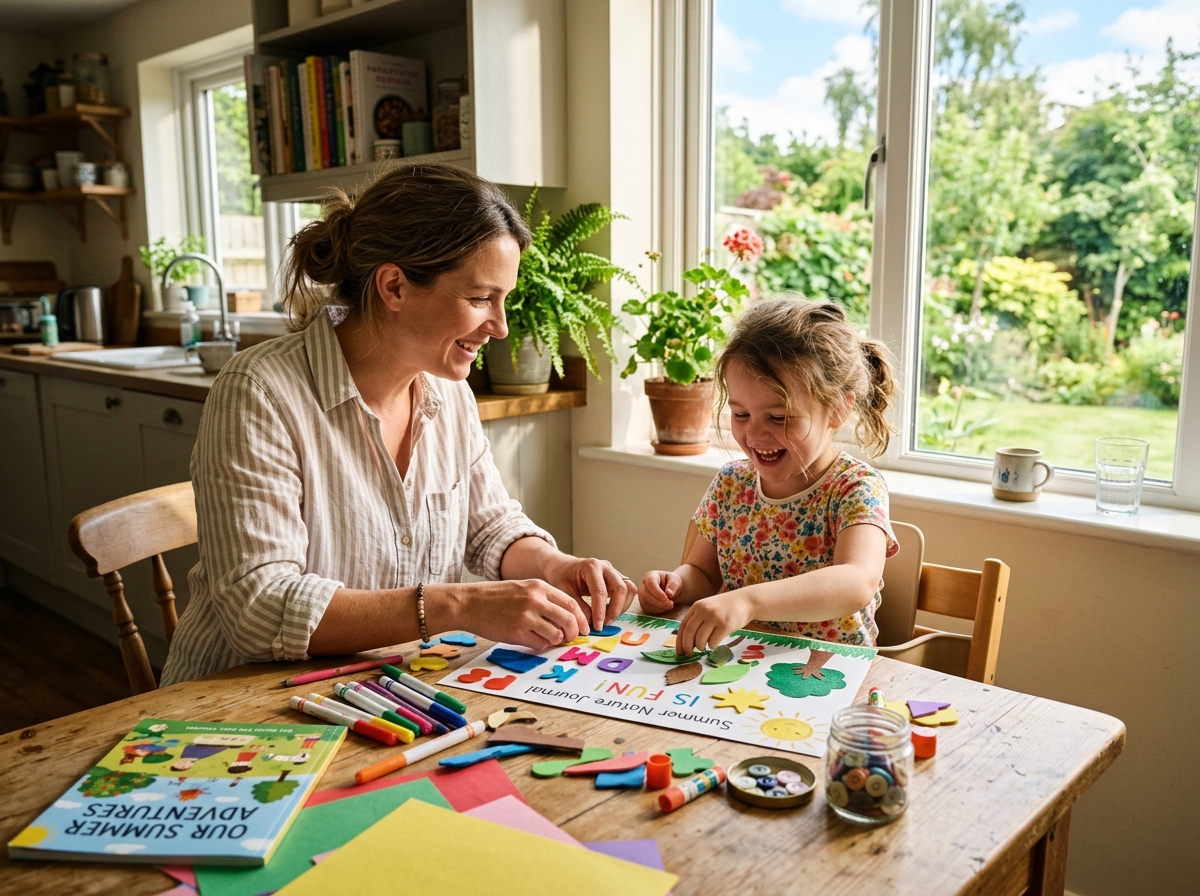
A summer in the High Country is an ongoing science class for any child paying attention. Identifying native plants, tracking weather patterns at elevation, watching a creek’s flow change after rainfall, finding animal tracks on a trail — these are all authentic science experiences that build vocabulary, observation skills, and curiosity. A simple field journal — a notebook where a child records what they see on walks and hikes — turns outdoor time into a literacy and science activity simultaneously.
Local Farms and Markets as Math and Social Studies
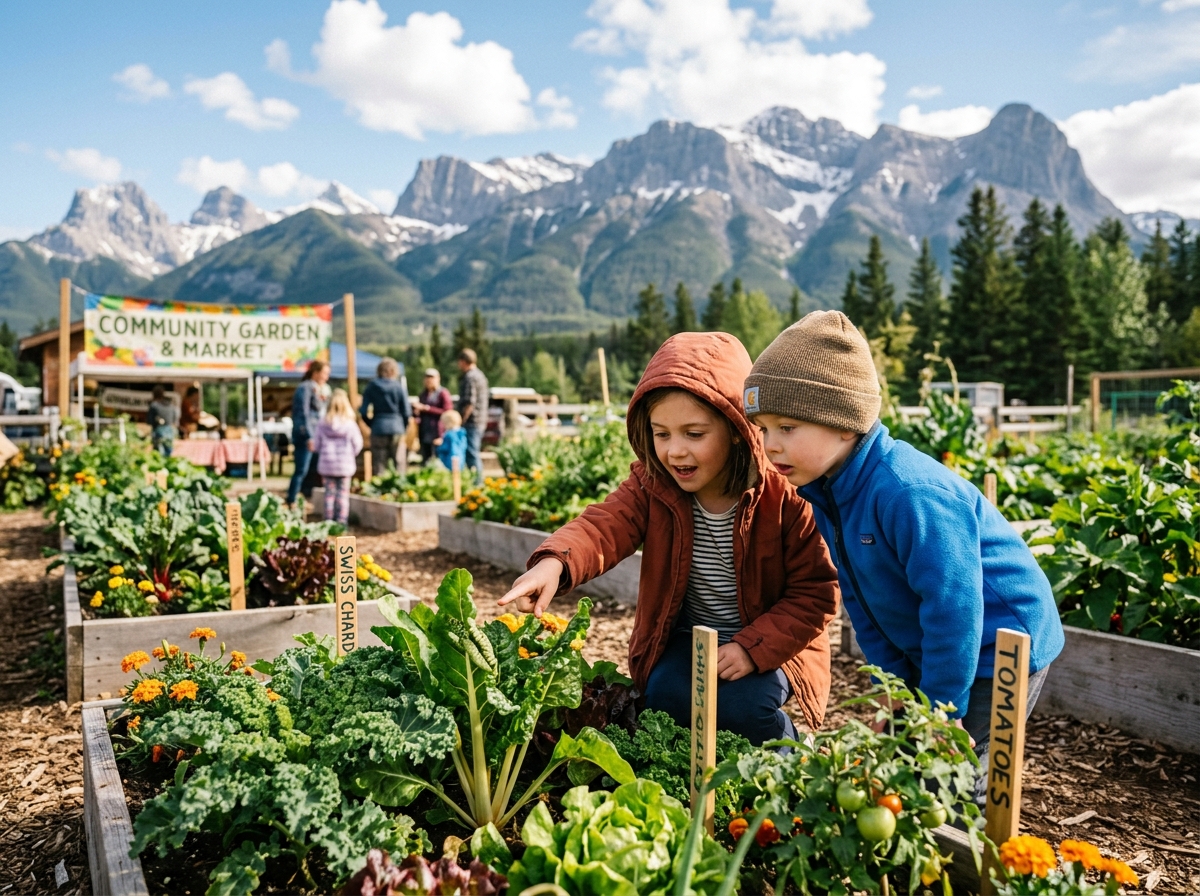
High Country farmers markets and farm stands offer one of the best real-world math environments available to families. Let your child handle the money, calculate change, estimate costs, and compare prices. Ask questions: How far did these tomatoes travel? What does it mean to buy something local? Why do some vegetables cost more than others? These conversations are simultaneously math, economics, geography, and nutrition — all in a ten-minute visit to a market.
Community Volunteering and Real-World Learning
Summer is an ideal time to connect children with community service — and service learning is one of the most effective ways to build the kind of engaged citizenship and real-world understanding that standardized tests cannot measure. If your family is interested in getting involved locally, our guide to community volunteering in the High Country is a great starting point for finding age-appropriate opportunities that the whole family can participate in together.
The Best Free Resource Most Families Underuse
There is one summer learning resource that is free, locally available, research-backed, and dramatically underused by families who could easily access it: the public library.
The Watauga County Public Library and other High Country branches run structured summer reading programs designed specifically to maintain reading skills and motivation during the summer break. These programs are free, well-organized, and often include activity challenges, reading logs, author events, and incentives that keep children engaged. Children who participate in summer library reading programs consistently show better reading retention in the fall than those who do not.
What the Library Offers Beyond Books
Beyond the reading program, most local libraries offer free summer programming that covers STEM activities, art projects, storytelling sessions, and educational workshops — all at no cost to families. For High Country families looking for enriching summer activities that do not strain the budget, the library is one of the most valuable and underutilized resources available. Visit your local branch website or stop in to pick up a summer programming calendar — most programs begin in June and run through July.
An Age-by-Age Summer Learning Guide
Summer learning maintenance looks different at different ages, and matching the approach to the child is essential for keeping it sustainable and stress-free.
Early Elementary — Ages 5 to 8
At this age, the priority is maintaining reading fluency and basic math fact recall. Daily read-alouds — where a parent reads to a child — are just as valuable as independent reading at this stage. Number games, counting activities, and simple cooking math keep numeracy alive without worksheets. The goal is to make learning feel like play as much as possible. Summer at this age is not about academic acceleration. It is about keeping skills warm and keeping the love of learning alive.
Upper Elementary — Ages 9 to 11
Children in this range benefit from a more structured approach — a clear reading goal for the summer, a consistent math practice habit three to four days per week, and enriching experiences that connect learning to real life. This is a great age to introduce reading challenges — a summer book list with a mix of genres, including at least one nonfiction title — and to let children keep a simple journal or sketchbook that combines writing and creativity.
Middle School — Ages 12 and Up
Tweens and teens are more resistant to anything that feels like schoolwork, and that resistance is worth respecting strategically. The most effective summer learning approaches for this age group are disguised as autonomy — letting them choose what they read, giving them real responsibilities that involve math and planning, and connecting their interests to learning in ways they do not immediately recognize as academic. A teen who spends the summer learning to cook, manage a small budget, or plan a family trip is doing real math, writing, and critical thinking — without a single worksheet in sight. Our post on teaching kids to cook with age-appropriate kitchen skills is a great resource for building that kind of practical, learning-rich summer activity into your family’s routine.
Keep It Light — Seriously
The most important principle in summer learning maintenance is one that is easy to say and hard to live: keep it light. Summer is not the school year. Children need downtime, unstructured play, and the freedom to be bored in ways that spark creativity. A summer that is overscheduled with learning activities is almost as counterproductive as a summer with none at all — because it burns out both children and parents, and it erodes the very joy and curiosity that make learning possible in the first place.
Research from educational experts is clear that you do not need to turn your home into a year-round classroom to keep your student on track. A few intentional habits — daily reading, regular real-life math, a library visit or two, and the occasional outdoor learning adventure — are genuinely enough to prevent regression and set your childup for a confident September.
The goal is not a perfect summer. It is a summer where your child arrives at the first day of school feeling ready — not because they worked all summer, but because learning was woven naturally into the season, alongside the swimming and the hiking and the long, unhurried afternoons that make a High Country summer worth living.
For more ideas on keeping summer enriching and screen-balanced, our post on the slow childhood movement and why unstructured time matters is a great companion read — because the best summer learning often happens when no one is trying to make it happen at all.