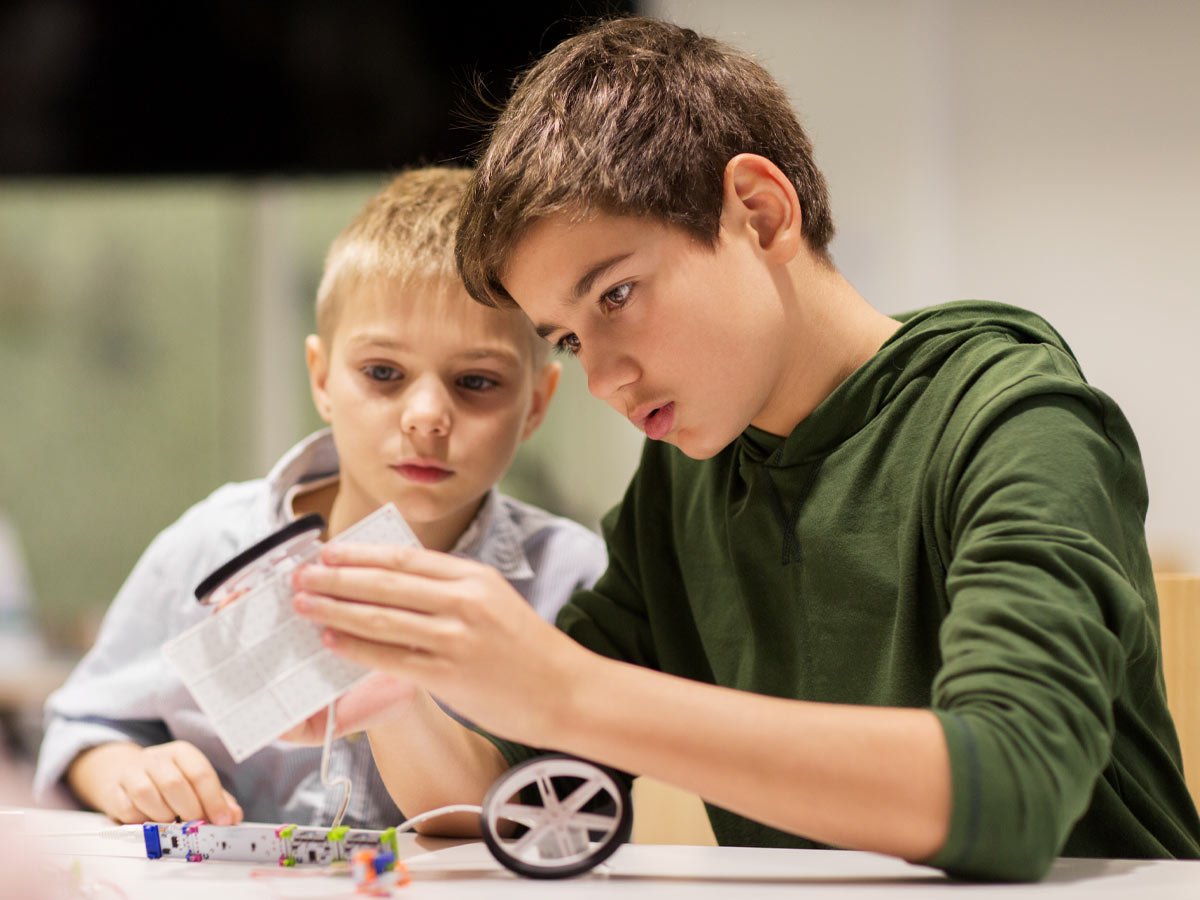
It usually starts with two words no parent looks forward to hearing: “I’m bored.”
The instinct is immediate — hand over the tablet, turn on a show, suggest an activity. Anything to fill the silence and stop the complaint. But what if that moment of boredom — that restless, uncomfortable stretch of nothing — is actually one of the most valuable things that can happen in your child’s day?
Across the High Country, and across the country, a quiet but meaningful shift is underway. Families are stepping back from packed schedules, constant stimulation, and the endless scroll of digital entertainment. They are embracing what researchers and parents alike are calling the slow childhood movement — and the evidence behind it is hard to argue with.
What Is Slow Childhood?
Slow childhood is not neglect. It is not laziness. And it is not about turning back time to some imagined golden era. It is an intentional approach to childhood that prioritizes unstructured time, free play, outdoor exploration, and simple, low-tech activities over curated enrichment, back-to-back extracurriculars, and constant digital stimulation.
The movement draws its energy from a growing body of research showing that children need unscheduled, self-directed time to develop the cognitive, emotional, and social skills that structured activities alone simply cannot provide. It also draws from the lived reality of parents who have watched their kids become incapable of entertaining themselves — staring blankly at a room full of toys and declaring there is nothing to do.
Scientific American has covered extensively how free play is critical for social development, stress management, and the building of cognitive skills like problem-solving. And in 2026, a clinical report reaffirmed by the American Academy of Pediatrics emphasized that play strengthens brain structure and function — particularly executive skills such as impulse control, emotional regulation, and goal-setting. These are not small benefits. These are the foundations of a functioning, capable adult.
What Happens in a Child’s Brain During Boredom
When your child complains of boredom, their brain is not idle. It has shifted into what neuroscientists call the default mode network — a state associated with daydreaming, self-reflection, imaginative thinking, and the processing of social information. Far from being wasted time, this resting state is when some of the most important mental work takes place.
Boredom pushes children to generate their own ideas, solve their own problems, and discover what genuinely interests them — rather than passively consuming whatever is placed in front of them. Research published in the Journal of Experimental Child Psychology found that boredom in children as young as four is closely linked to self-regulation skills, including attention and behavioral control. In plain terms: letting your child be bored is one of the most productive things you can do.
From Passive Watching to Active Making
One of the most striking things that happens when children are given unstructured time is the shift from consumption to creation. A child who has spent weeks watching videos of marble runs online will, when the screen is taken away and the afternoon is left open, often start building one. The idea was already there — waiting for boredom to turn it into action.
This is what child development experts mean when they describe boredom as a gateway to self-directed play. Every imaginative game, every backyard fort, every invented world of stuffed animals and neighborhood adventures — all of it starts with a kid who has nothing scheduled and nowhere to be.
The Overscheduled Child and What It Costs
The trend toward heavily scheduled childhoods reflects genuine parental love and investment. We want our kids to have every advantage — music lessons, sports teams, enrichment programs, tutoring. But researchers studying child development have raised consistent concerns about what gets crowded out when children’s hours are filled from morning to evening.
A Harris Poll of more than 500 children ages 8 to 12 found that 45 percent would rather play with friends in activities not organized by adults. Nearly three-quarters wanted more unstructured time. Children themselves are telling us something that the research confirms: they need room to breathe, to wander, and to figure things out on their own.
Board Games Are Back — and That Is a Good Thing
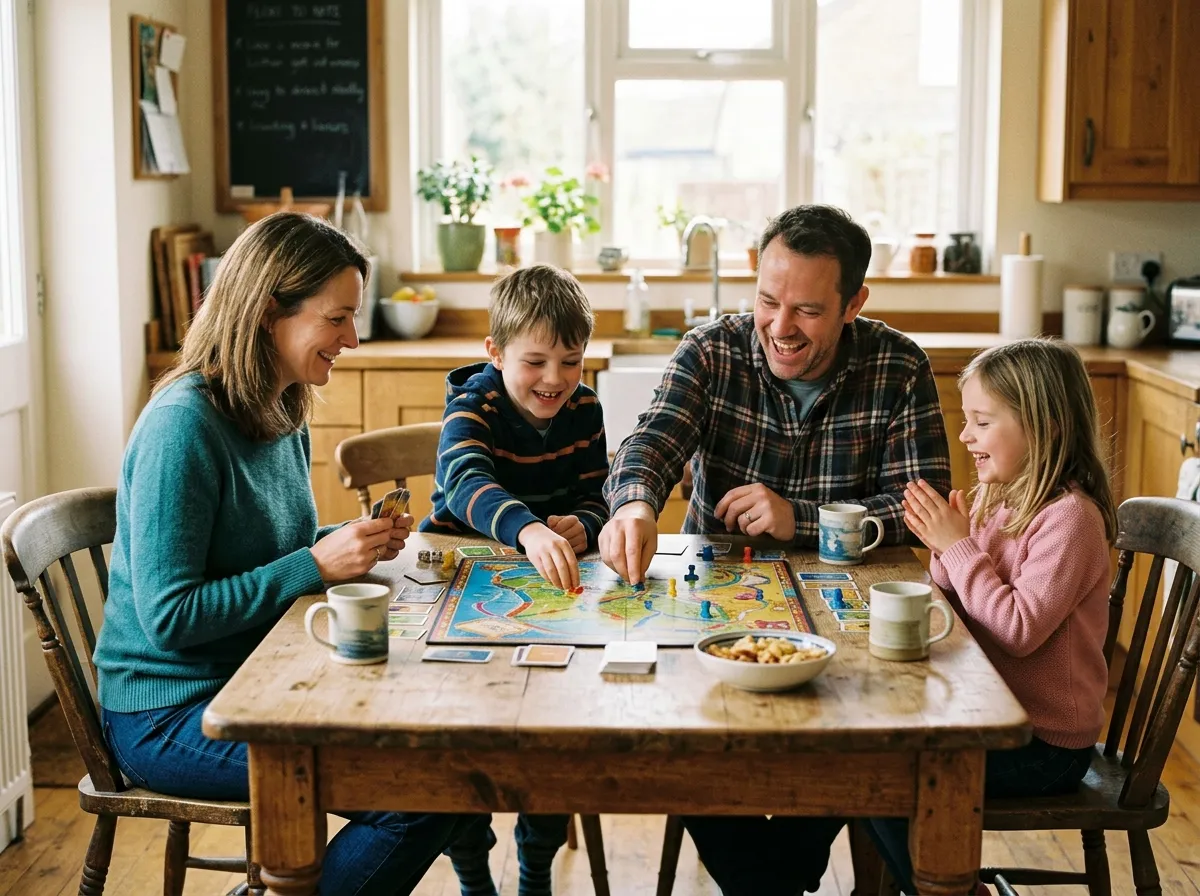
One of the most visible signs of the slow childhood movement is the remarkable comeback of board games and card games in family homes. After years of being crowded out by screens, tabletop games have experienced what many are calling a full-on renaissance — and the reasons go well beyond nostalgia.
Skills No App Can Teach
Board games are doing something that passive entertainment simply cannot: they require players to be present, take turns, manage frustration, strategize, negotiate, and lose gracefully. A single game of Ticket to Ride teaches resource management and long-term planning. A round of Uno produces more genuine emotional regulation practice — and more real family conversation — than most structured activities.
For younger children, even simple games teach foundational skills: waiting, following rules, handling disappointment, and understanding that someone else’s turn matters too. These are the building blocks of emotional intelligence, and they are built through the friction and fun of real-world interaction — not through a screen.
A Low-Cost, High-Connection Investment
For High Country families watching the family budget, board games are one of the most cost-effective investments you can make in your children’s development. A quality game costs a fraction of a month’s streaming subscription and can provide hundreds of hours of engagement, connection, and genuine fun. A standard deck of cards costs a few dollars and contains enough games to fill an entire childhood.
The Backyard as Classroom
In the High Country, we are fortunate to have something many urban families can only dream about: space. Real, outdoor, unstructured space where children can run, dig, build, explore, and get genuinely dirty. That backyard — or the trail at the edge of the neighborhood, or the creek behind the school — is not just a nice amenity. It is a developmental resource.
Outdoor free play builds physical strength, coordination, and cardiovascular health. It also builds risk tolerance — the ability to assess a situation, try something uncertain, and recover when things go wrong. Children who climb trees, navigate uneven terrain, and test their own limits outdoors are developing a kind of competence and confidence that structured indoor activities cannot replicate.
The Let Grow Project, a nonprofit organization focused on restoring independence and resilience to childhood, provides toolkits specifically designed to help communities normalize unsupervised outdoor play. Their resources are a practical starting point for any High Country family wondering how to give their kids more freedom in a way that feels safe and intentional.
What Slow Childhood Looks Like in the High Country
The good news for families in our corner of North Carolina is that the High Country is genuinely built for slow childhood. Our mountains, trails, open fields, and close-knit communities make it easier than almost anywhere else to give children the kind of free, unhurried time that the research says they need.
Protecting Unscheduled Time
Start by looking at your family’s weekly calendar and identifying where you can create open, unscheduled pockets of time. This does not mean eliminating every activity — it means being intentional about balance. Even two or three afternoons per week with no agenda, no organized practice, and no screen time set as the default can make a meaningful difference.
When children first encounter unstructured time after a period of heavy scheduling and screen use, the initial response is often complaints. Expect it. Most parents who have gone through the adjustment report that the transition period lasts a few weeks — and that what comes after is children who play independently, create inventively, and stop reaching for a screen every time they feel a moment of stillness.
Simple Swaps That Make a Real Difference
Slow childhood does not require a complete lifestyle overhaul. Small, consistent swaps add up quickly:
- Replace one weeknight screen hour with a board game or card game as a family.
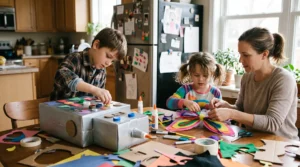
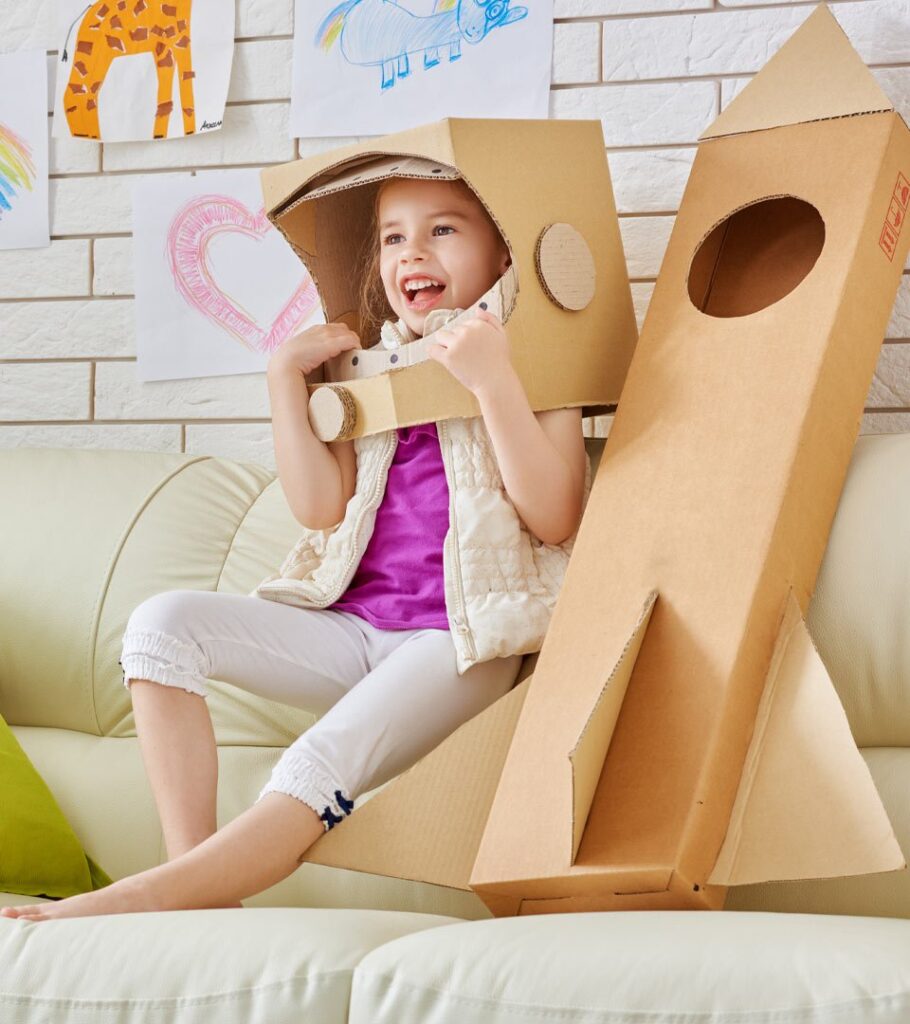
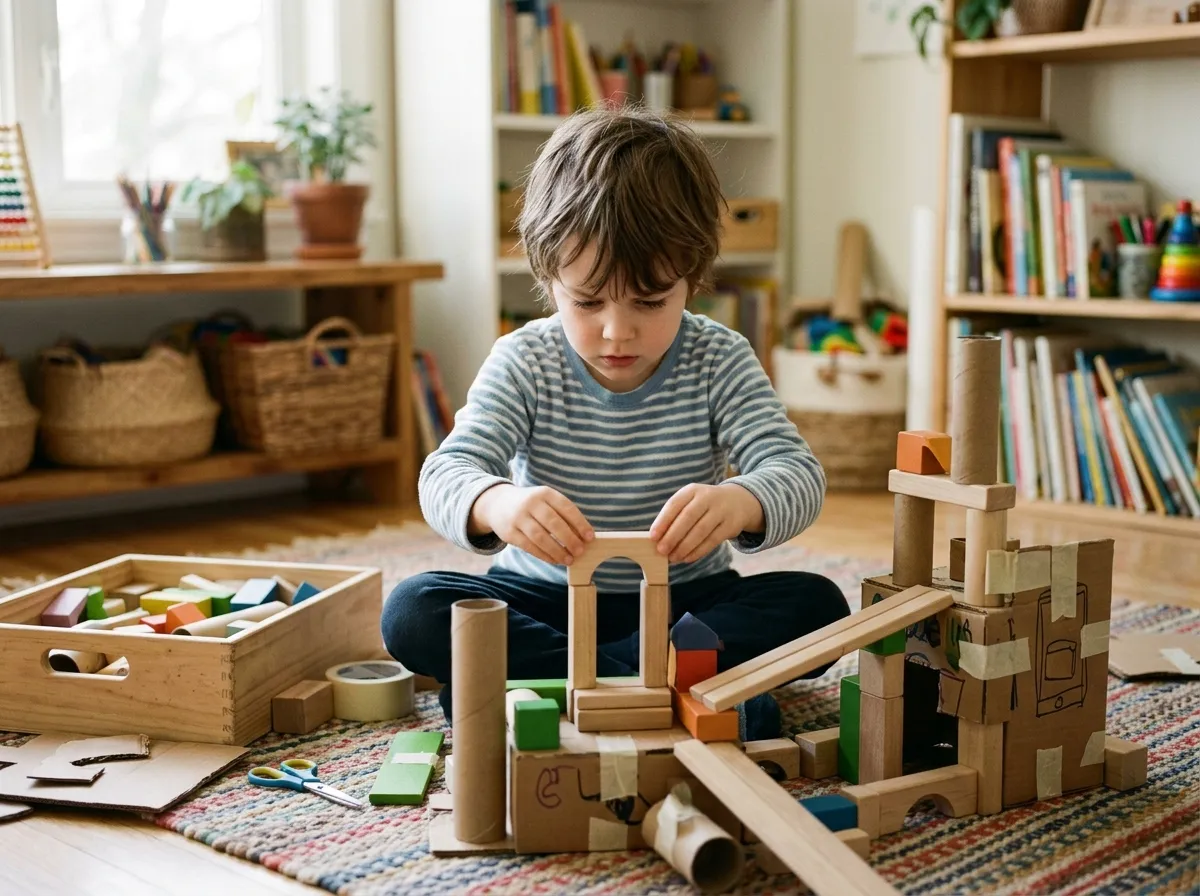
- Keep a box of simple open-ended materials — blocks, cardboard, string, craft supplies — accessible and let children decide what to do with them.
- Make outdoor time the default on weekends before screens become an option.
- Let your child be bored without immediately offering a solution. Wait. See what they come up with.
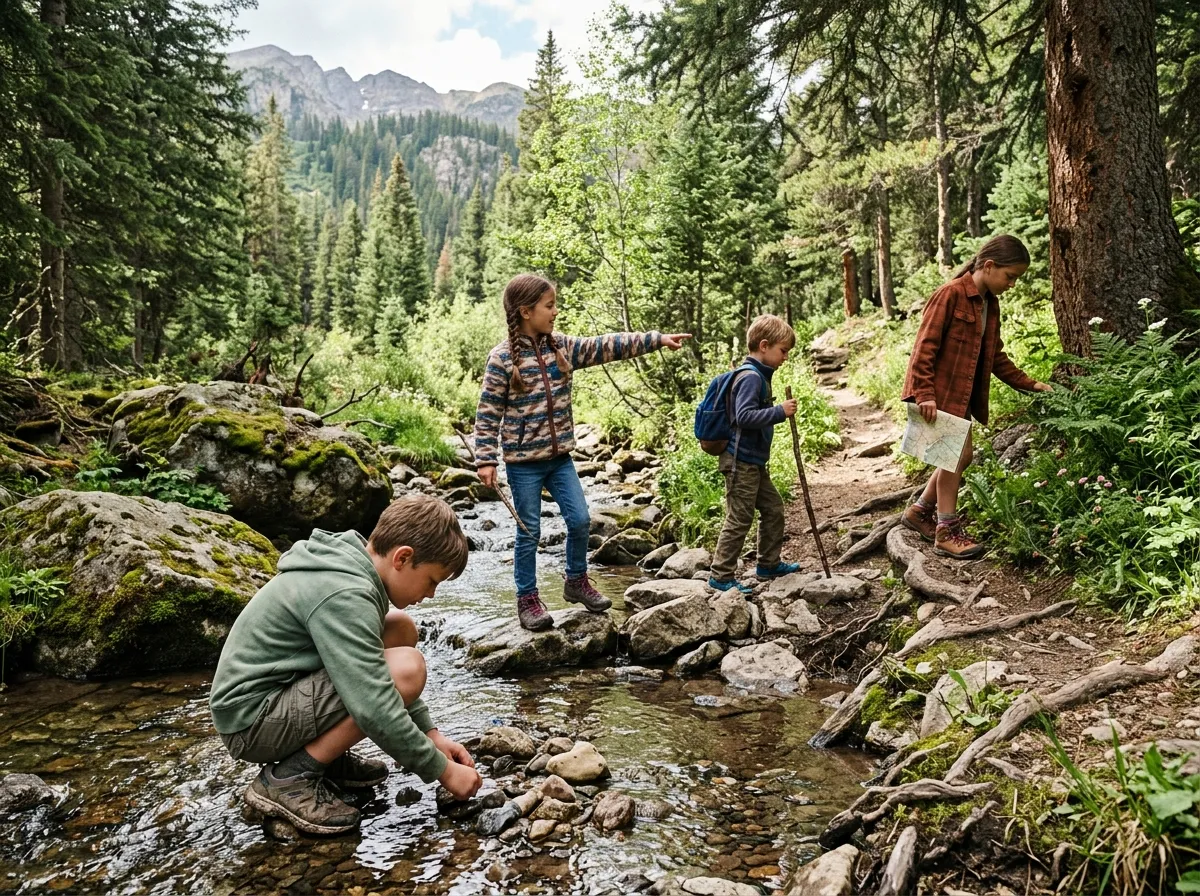
- Walk or explore local trails without a destination or a time limit. Let curiosity lead.
If you are looking for specific outdoor ideas tailored to the High Country’s seasons and terrain, our guide to experiential parenting and outdoor memories is a great place to start.
Permitting Yourself to Step Back
One of the hardest parts of embracing slow childhood is the quiet pressure many parents feel — the worry that less structured time means less prepared children. It is worth saying plainly: the research does not support that fear. What it consistently shows is the opposite. Children who have ample unstructured time, outdoor freedom, and space for self-directed play develop stronger executive function, better emotional regulation, more creative thinking, and greater social competence than children whose time is always managed by adults.
Stepping back is not giving up. It is giving your child something genuinely valuable — and in the High Country, where the mountains are right outside the door, and the pace of life still allows for it, slow childhood is not a sacrifice. It is a privilege worth protecting.
And if you find that making space for your children also means making space for yourself, our piece on self-care for busy High Country moms speaks directly to that balance — because a slower, more present childhood is easier to offer when you are not running on empty yourself.
The Quiet Revolution Happening in Backyards
The slow childhood movement is not a rejection of ambition or a lowering of expectations for our kids. It is a recalibration — a recognition that the overscheduled, overstimulated, always-connected childhood we have been building toward has costs we did not fully anticipate, and that some of the most developmentally rich experiences a child can have look, from the outside, like nothing much at all.
A child with a cardboard box and an afternoon. A family around a board game on a Friday night. Kids on a trail, no destination, no timer. These moments are not gaps in a child’s development. They are the development.
In the High Country, we have always understood something about the value of slowing down. The mountains have a way of putting things in perspective. And right now, the research, the pediatricians, and the parents who have made this shift are all saying the same thing: the most important thing you can give your child this year might just be an unhurried afternoon and permission to be bored.