
Mountain weather can change a family’s plans quickly. In the High Country, heavy rain, strong winds, downed trees, flooding, and power outages can affect the same day. A simple High Country family emergency weather plan gives everyone a calmer starting point when alerts appear or conditions change.
This plan is not about predicting the next storm. It is about deciding what your household will do before a weather emergency: how you will receive alerts, who you will contact, where you will meet, what you will take, and when you will pause travel or outdoor plans. Review it together when everyone is calm, then update it as your children grow and your routines change.
Why High Country Families Need a Weather Plan
Families in Boone and Watauga County live with a mix of mountain weather concerns. Rain can make streams rise quickly. Wind can bring down limbs or disrupt power. Steep slopes and saturated ground can create additional hazards. A plan helps parents move from “What do we do now?” to a few clear, familiar steps.
Start with reliable information. ReadyNC’s family preparedness guidance recommends making a plan, building a kit, staying informed, and considering where household members will meet if they are separated. Keep the plan short enough that children can understand their part. A preschooler may know to stay with an adult; an older child may know the contact and paper-list location.
Preparedness can also support emotional resilience. Invite children to help choose a flashlight location, pack a comfort item, or practice a family check-in. These small jobs create useful routines. For more age-appropriate ways to build confidence, read our guide to raising resilient kids.

Build Your Family Plan in 15 Minutes
Use one sheet of paper, a note on the refrigerator, or a shared document that can also be printed. The goal is not perfection. The goal is to give every family member a reliable next step.
Choose two ways to get alerts
Pick more than one source because a phone battery, signal, or app may not be available. The National Weather Service provides official flood safety information and explains the difference between watches and warnings. A watch means conditions are possible. A warning means a hazardous event is happening, imminent, or expected soon. Treat official warnings as a prompt to act on your household plan.
For local updates, bookmark the Town of Boone Alert Center and review its notification options. If your family lives outside town limits, identify the county and weather sources you will use. Make sure at least one adult can receive alerts, and write down a backup source that does not depend on one person’s phone.
Set a contact and meeting plan
Choose one out-of-area contact who can receive a short message if local lines are busy. Write that person’s name and number on paper, not only in a phone. Then choose two meeting places: one close to home for a sudden separation and one outside your immediate neighborhood if it is safe and officials advise leaving the area. Do not create your own evacuation route during an emergency. Follow current directions from emergency officials and avoid roads that are closed or flooded.
Make a small, useful kit
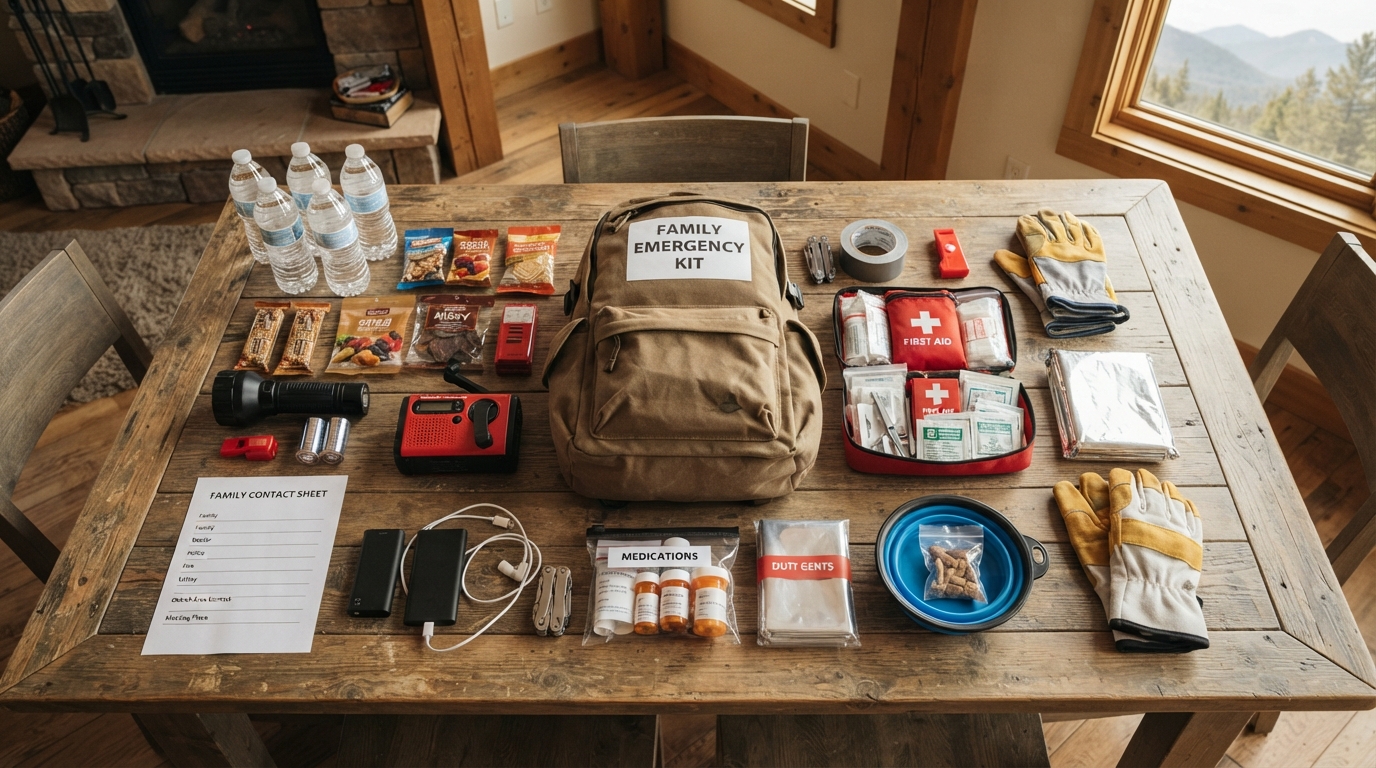
Keep basic supplies together in a tote or backpack where adults can reach them. Include water, shelf-stable food, a flashlight, spare batteries, a battery-powered or hand-crank radio, chargers, basic first-aid supplies, needed medications, pet supplies, and copies of key information. Adjust the kit for infants, older adults, mobility needs, and anyone with a health condition. Check food, medication, batteries, and clothing at least twice a year.
For weather-specific winter preparation, see our High Country winter safety guide for families. A year-round kit and a winter kit can overlap, but winter travel and cold-weather supplies deserve their own review.
Know What to Do When Conditions Change
Your plan should make room for the fact that each emergency is different. Current instructions from local officials and the National Weather Service always come first. Use the following prompts as calm reminders, not as a replacement for real-time guidance.
During heavy rain or flood alerts
Check the forecast and alerts before school drop-off, work commutes, hikes, and errands. If roads are flooded, turn around and choose a safe alternative. Never walk, drive, or let children play near moving floodwater. Keep everyone away from creeks, drainage channels, and low-lying areas during rapidly changing conditions. If you have outdoor plans, postpone them rather than trying to squeeze them in between storms.
Weather days can be easier when a backup plan is ready. Save a few low-stress options for staying home, or use our list of indoor activities in Boone and Blowing Rock for a later, safe-weather outing. The priority during an active alert is to follow official information, not to find a new adventure.
During wind, outages, or downed trees
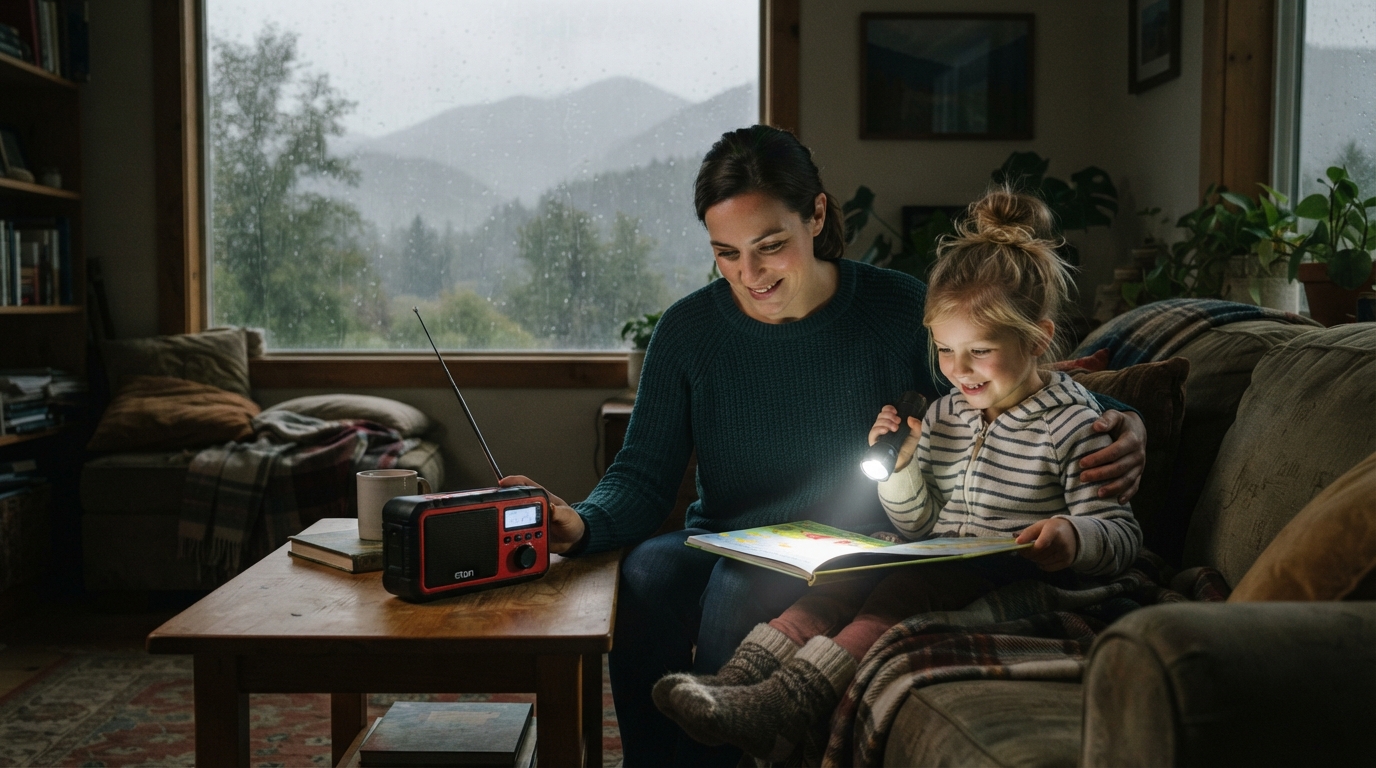
Move the family indoors and away from windows if officials advise sheltering. Keep phones charged when an outage is possible, but preserve battery power by limiting nonessential use. Use flashlights instead of candles to reduce fire risk. Never run a generator, grill, or fuel-burning device inside a home, garage, or enclosed space. If you see a downed power line, stay well away and report it to the utility or emergency services rather than approaching it.
The Watauga County Emergency Services page explains the county’s emergency-management role across preparedness, response, and recovery. Check official local sources for current instructions, assistance locations, and road or utility updates. Do not rely on screenshots or old social posts when conditions are changing.
Prepare for Slope and Travel Concerns
Mountain terrain adds an important question to your plan: what will we do if heavy rain affects the area around our home or travel route? Avoid making technical judgments about a slope, a road, or a stream crossing. If you notice conditions that concern you, follow official instructions and move away from immediate danger. Call 911 for an emergency. For non-emergency questions about local response, use current county resources.
Before traveling, tell another adult where you are going and when you expect to arrive. Keep a charged phone, water, warm layers, and basic supplies in the car. Turn around if weather, visibility, or road conditions feel unsafe. A family plan works best when it gives adults permission to change plans early.
Practice Once, Then Keep It Current
After you make your High Country family emergency weather plan, try a brief practice run. Ask everyone: Where do we find the flashlight? Who do we contact if we are separated? What do we do if an alert arrives while we are away from home? Keep the conversation matter-of-fact and age appropriate.
Update your plan after a move, a school change, a new caregiver, or a change in medications or household needs. Refresh it before the wettest seasons and before winter weather arrives. A prepared family is not a family that expects the worst. It is a family that has made space for clear communication, safer choices, and a calmer response when the forecast changes.