
A child saying “I do not want to go to school” can stop a morning in its tracks. Sometimes the feeling follows a new classroom or an unsettled week. Sometimes it becomes a repeated pattern of distress that makes school feel impossible. For High Country families, a helpful first response is calm curiosity, a predictable routine, and early school communication.
This article uses school avoidance to describe anxiety or distress connected to missing school or struggling to get through the day. It is not a diagnosis, defiance, or proof that a family does not care about attendance. A child may be worried about separation, friends, bullying, academics, health symptoms, transportation, or something else. Understanding the barrier is the first step.
When School Worries Need More Attention
Many children feel nervous at the beginning of a school year or during a transition to a new school. Those feelings may ease as routines, teachers, and classmates become familiar. School avoidance deserves closer attention when distress repeats, affects attendance, or regularly disrupts sleep, mornings, learning, friendships, or family life.
Signs can look different from child to child. One child may complain of stomachaches or headaches on school mornings. Another may stall, hide, cry, become irritable, ask for repeated reassurance, or have trouble sleeping. Older children may withdraw, argue, or say they are too exhausted to attend. These signals are an invitation to slow down and listen.
UCLA Health’s clinician guidance notes that school transitions can heighten anxiety and recommends understanding a child’s reluctance to attend. North Carolina’s AttendNC research review likewise calls for supportive, barrier-focused responses.

Start With a Calm, Specific Conversation
When everyone is rushed, it is tempting to ask, “Why will you not go?” That question can feel large, blaming, or impossible to answer. Choose a calmer moment and ask one small, concrete question at a time.
Questions that open the door
Try questions such as, “What feels hardest about school right now?” “When does the worried feeling show up?” or “What would make tomorrow one step better?” Listen for patterns without rushing to correct them. Your child may need time to find the words.
Reflect what you hear before offering a solution. You might say, “It sounds like lunch feels lonely,” or “You are worried about being called on in math.” It tells your child that you take the feeling seriously and will help identify a next step.
Look for barriers, not blame
Attendance can be affected by emotional concerns, peer conflict, learning needs, sleep disruption, health issues, transportation, or a stressful change at home. AttendNC encourages families and schools to ask what barrier is driving the pattern and what support could make attendance more feasible.
Keep brief notes for a week or two. Record when distress occurs, what happened before it, physical symptoms, and anything that helped. This is useful information to share with a teacher, counselor, pediatrician, or qualified mental-health professional if the pattern continues.
Build a Night-Before Routine That Reduces Friction
School mornings ask children to manage many transitions at once: waking, dressing, eating, leaving home, traveling, and entering a busy building. Moving a few decisions to the night before can create a calmer runway.
Keep the plan small and visible
Choose three or four repeatable steps. For example, pack the backpack, choose clothes, prepare a simple breakfast item, and review tomorrow’s first activity. Younger children may do well with pictures; older children may prefer a short checklist.
A consistent wind-down routine can also support the next morning. Visit our guide to creating a calmer bedtime routine for practical ways to make the evening more predictable. If worries surface at bedtime, give them a brief space: write down the concern, identify one adult who can help, and return to a familiar calming step such as reading or quiet music.

Create a Supportive Morning Plan
On a difficult morning, fewer words can be more helpful than a long debate. Use a steady sequence: connect, name the next small action, and follow through with the plan you made together.
You might say, “I can see this feels hard. We are going to get dressed, eat breakfast, and take the next step together.” Offer limited choices that preserve the routine: “Blue shirt or green shirt?” “Do you want to walk beside me or hold my hand to the car?” Choices help a child feel some control without asking them to solve the entire school day.
Focus on the next manageable step
For some children, “Go to school all day” feels overwhelming. A smaller goal may feel possible: getting shoes on, arriving at the entrance, checking in with a trusted adult, or staying through first period. Do not design a plan alone. Work with the school when attendance is affected so the expectations, support, and re-entry steps are consistent.
Notice effort, not just outcomes. A simple “You did something hard by getting in the car” reinforces courage without making the morning feel like a performance. Avoid turning staying home into a more appealing alternative with extra entertainment or special privileges. At the same time, avoid punishment or shame. The aim is to help your child gradually practice the skills needed to approach a hard situation with support.
Partner With the School Early
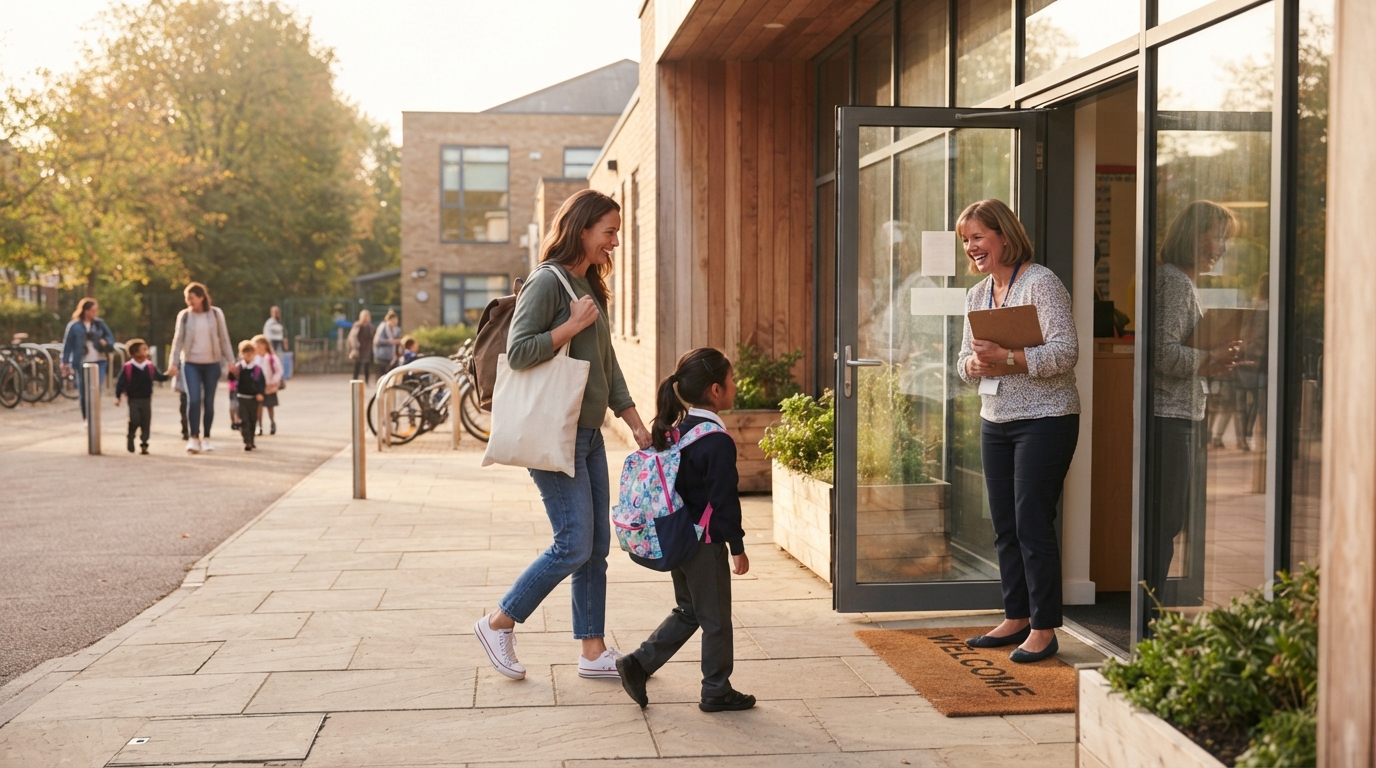
Contact the school early. Send a brief message to the teacher, counselor, school social worker, or attendance contact. Share the pattern, ask for a consistent point person, and ask what supports are available. A trusted adult at arrival, a check-in, a quieter transition, a plan for missed work, or help with peer concerns may make a difference.
North Carolina’s guidance describes supportive, personalized communication and barrier reduction as more useful than a one-size-fits-all response. Keep the conversation collaborative: “We want to understand what is making attendance hard and work on a plan that helps our child reconnect.” Our back-to-school survival guide can also help families rebuild practical routines around mornings, calendars, and school supplies.
Know When to Ask for More Support
Reach out to your child’s pediatrician or a qualified mental-health professional when distress persists, worsens, or significantly interferes with school, sleep, health, friendships, or daily life. The Kids Mental Health Foundation notes that persistent school avoidance may warrant professional support and offers parent resources.
If your child talks about self-harm, suicide, or being unsafe, seek immediate help through 911 or 988, the Suicide and Crisis Lifeline. For ongoing concerns, your child’s school and healthcare team can help identify the appropriate local or telehealth options. Our guide to kids’ and teens’ mental-health support in rural communities offers additional High Country family context.
School avoidance can feel isolating, but families do not have to solve it alone. A warm routine, a specific conversation, and early teamwork with the school can help a child take the next manageable step. Progress may be gradual. What matters is that your child learns: difficult feelings can be heard and support is available.