There is a particular kind of quiet that settles over a child who is truly absorbed in play. Not the passive, glassy-eyed quiet of screen time, but a focused, working quiet — hands busy, mind fully present, occasionally muttering to themselves as they figure something out. It is one of the most beautiful things to witness. And it almost never happens with a toy that does one thing.
It happens with a cardboard box. A handful of smooth river stones. A pile of sticks collected on the way home from school. A basket of fabric scraps and wooden discs. These are loose parts — open-ended materials with no fixed purpose, no right answer, and no limit on what a child can make them become. And in 2026, they are at the center of one of the most compelling conversations in child development, parenting, and education.
For High Country families already leaning into intentional, nature-forward living, loose parts play is not a new concept — it is something many of us have been doing instinctively for years. But understanding the research behind it, and knowing how to set up a thoughtful loose parts environment, transforms a casual habit into one of the most powerful developmental investments you can make for your child.
What Loose Parts Play Actually Means
The term “loose parts” was first introduced by architect Simon Nicholson in 1971, who proposed that the degree to which any environment is stimulating is directly related to the number of variables — or moveable, manipulable elements — it contains. In children’s play terms, loose parts are simply materials that have no predetermined use. They are not designed to do one specific thing. They do not instruct the child. They invite the child to decide.
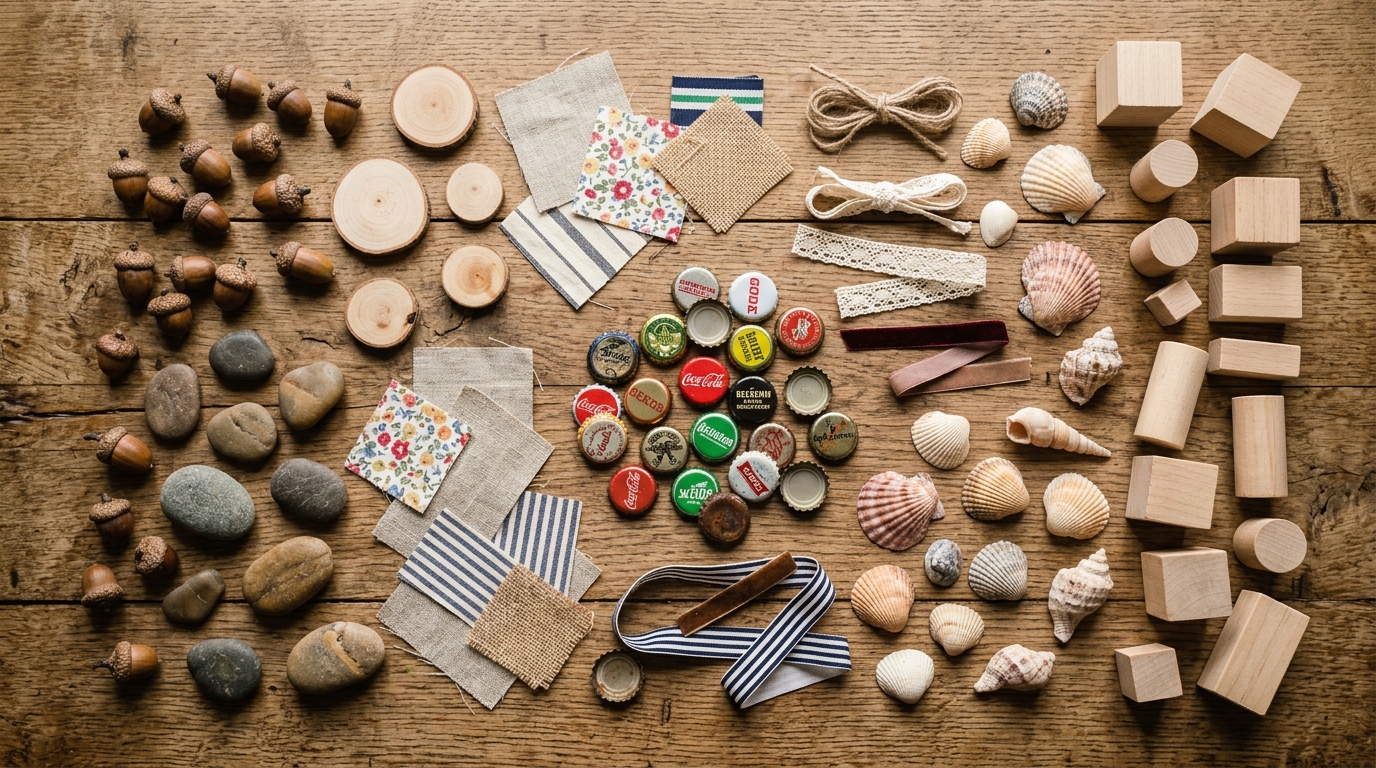
Sticks, pebbles, leaves, pinecones, shells, bottle caps, fabric scraps, cardboard, buttons, wooden blocks, acorns, seed pods, sponges, ribbon, and kitchen utensils are all loose parts. So are sand, water, clay, and mud. The common thread is that what they become is entirely up to the child’s imagination and interest. A stone can be a cooking ingredient, a stepping stone, a piece of treasure, a weight, or a character in a story — sometimes all within the same afternoon.
This open-endedness is not a limitation. It is precisely the point. And the research on what happens when children play with these materials is striking.
Why Loose Parts Play Builds Smarter, More Creative Kids
A 2025 systematic review published in PMC — the National Institutes of Health’s research database — examined the relationship between loose parts play and cognitive development in young children. The findings were clear: loose parts play encourages open-ended exploration, allowing children to manipulate materials in ways that support cognitive flexibility, problem-solving, and creativity. Unlike predefined toys, loose parts give children the autonomy to direct their play and foster decision-making and independent thinking.
This matters beyond early childhood. The skills built through loose parts play — divergent thinking, creative problem-solving, sustained attention, and self-direction — are among the most critical skills for academic success and lifelong adaptability. They are also skills that are increasingly difficult to develop in childhoods dominated by structured activities, one-purpose toys, and passive screen consumption.
The Brain Science Behind Open-Ended Play
When a child plays with a toy that has a defined function — a toy that lights up when you press a button, or a puzzle with a single correct solution — the brain engages in a relatively limited way. The toy directs the play. The child responds. When a child plays with loose parts, the dynamic reverses entirely. The child directs the play. Every decision — what these objects represent, how they relate to each other, what the goal is — comes from inside the child. The result is significantly more complex brain engagement, including the activation of executive function networks associated with planning, flexible thinking, and creative generation.
Research published through the Community Playthings research initiative found compelling evidence that providing children with open-ended natural materials fosters imagination, creativity, and symbolic — or abstract — thinking. Children playing with loose parts also demonstrated that their play naturally scaled to their developing skill level, offering what researchers call an ideal zone of proximal development: always appropriately challenging, never frustrating.
Social and Emotional Development Through Loose Parts
Loose parts play is not just a solo activity. When children play with loose parts together, the social learning that occurs is rich and genuinely complex. Educators working with loose parts consistently observe increased negotiation, collaboration, communication, and conflict resolution — because children must agree on what the materials mean, how they will be used, and what the rules of the shared world they are building together actually are.
One educator captured it well: children playing with loose parts demonstrate ways they can use materials “that we never would have imagined” — an observation that points to something important. When adults step back and let materials be open-ended, children step forward with ideas that surprise even experienced teachers and parents.
What to Include in a Loose Parts Collection
One of the most accessible things about loose parts play is that building a collection costs almost nothing. Most of the best loose parts are gathered, collected, or repurposed from everyday life. Here is a practical starting point organized by category.
Natural Materials
These are the most immediately available loose parts for High Country families and often the most engaging for children who spend time outdoors. Smooth river stones in a range of sizes, pinecones, acorns, seed pods, sticks of varying lengths, leaves (fresh and dried), moss, bark pieces, and small logs or wooden rounds. These materials connect children to the natural world they live in and carry a tactile richness that manufactured materials rarely match.
Recycled and Household Materials
Cardboard boxes and tubes, egg cartons, bottle caps, fabric and ribbon scraps, buttons, wooden spools, cork pieces, glass pebbles (smooth-edged), small metal tins, and jar lids. These are the materials that transform an ordinary recycling bin into a creative resource — and they cost nothing. Start saving anything with an interesting texture, shape, or weight and watch what your child does with it.
Simple Craft and Sensory Materials
Clay, beeswax, kinetic sand, loose beads, wooden blocks in multiple shapes, fabric pieces of varying textures, and natural fiber rope or twine. These add tactile complexity and creative range to a loose parts collection without requiring specific instructions or predetermined outcomes.
How to Store and Present Loose Parts
The way loose parts are stored and presented significantly affects how children engage with them. Open trays, wicker baskets, clear containers, and wooden bowls allow children to see what is available and make deliberate choices. Presenting materials intentionally — arranged by type, or laid out on a tray — signals that these materials are valued and worth engaging with. A cardboard box of jumbled items is less likely to spark the same quality of engagement as a thoughtfully arranged collection of similar materials in a visible, accessible space.
Loose Parts Play by Age — What to Expect
Loose parts play looks different at different ages, and understanding those differences helps parents set up the right environment and maintain realistic expectations about what their child will do with the materials.
Toddlers and Preschoolers — Ages 2 to 5
At this age, the play is primarily sensory and exploratory. Toddlers will fill and dump containers, sort by color or size, carry materials from place to place, and use them as props in simple pretend play. Younger children perform their most frequent pretend play with realistic objects, so loose parts that resemble real-world items — stones that become food, sticks that become cooking utensils, fabric that becomes a blanket — tend to be most engaging.
Safety is the primary consideration at this age. Choose loose parts that are too large to be swallowed and have no sharp edges. Natural materials — smooth stones, large pinecones, wide sticks — are excellent starting points.
Early Elementary — Ages 6 to 9
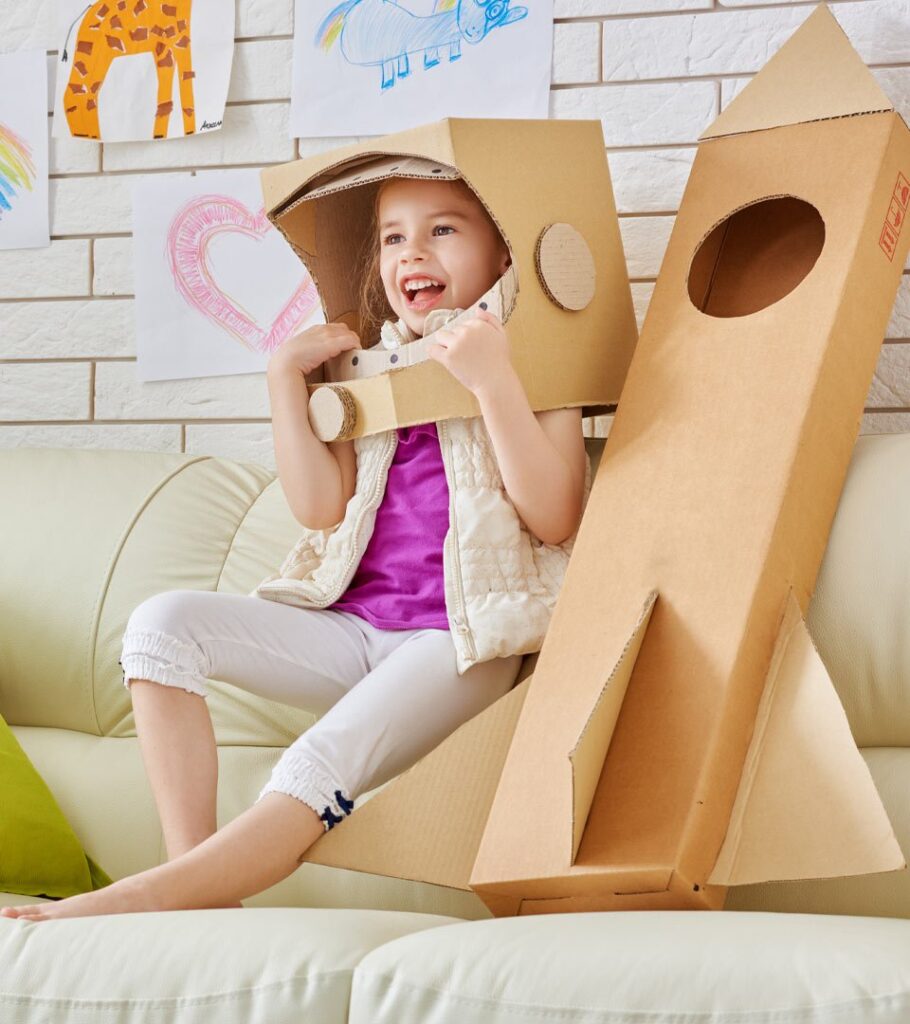
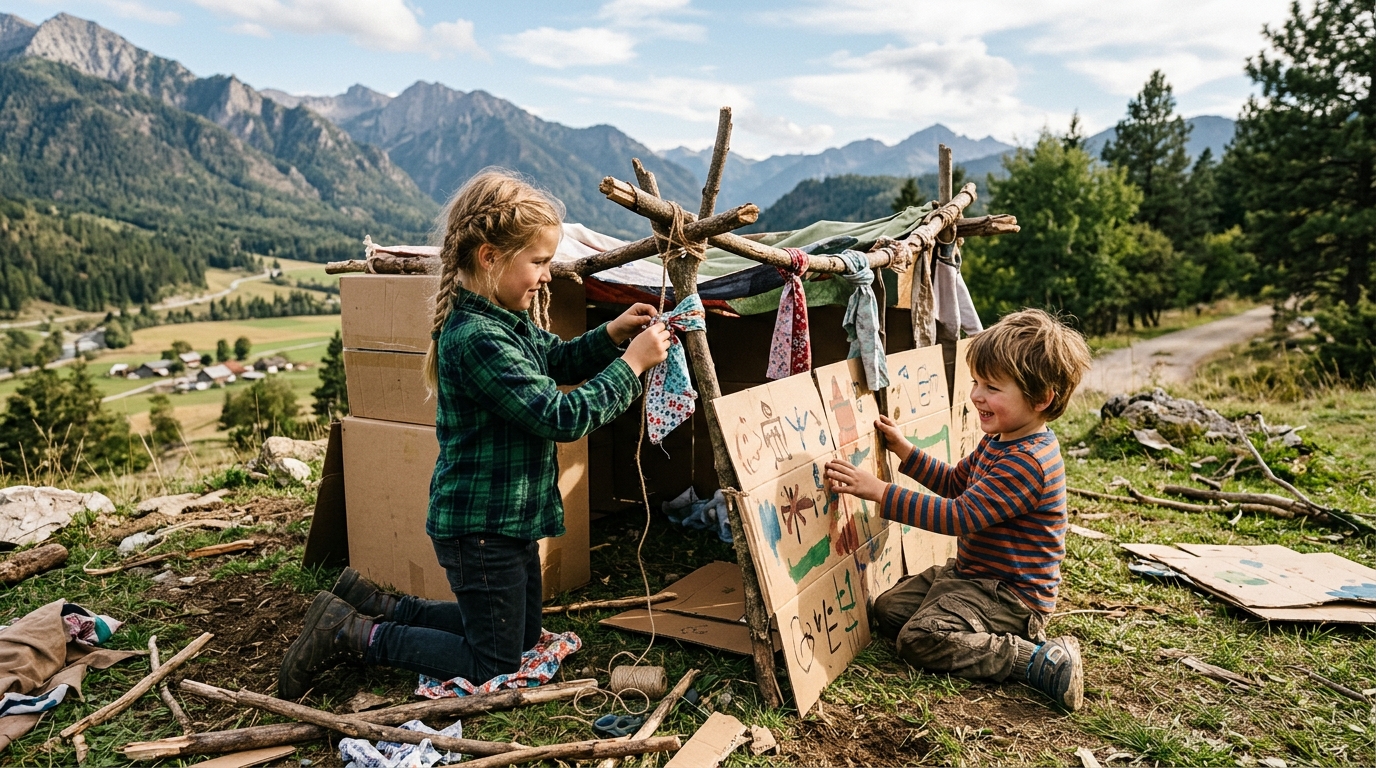
This is when loose parts play becomes genuinely elaborate. Children at this age build complex structures, create detailed imaginary worlds, use materials as stand-ins for characters and places in extended storytelling, and begin combining materials in inventive and sometimes surprising ways. Cardboard construction projects — boxes, tubes, and paper combined with string, tape, and found objects — are particularly compelling at this stage and can sustain engagement for hours.
This is also the age when collaborative loose parts projects — building something together with a sibling or friend — produce the richest social learning. The negotiations, the disagreements, the compromises, and the shared pride in what gets built are all doing important developmental work.
Tweens — Ages 10 and Up
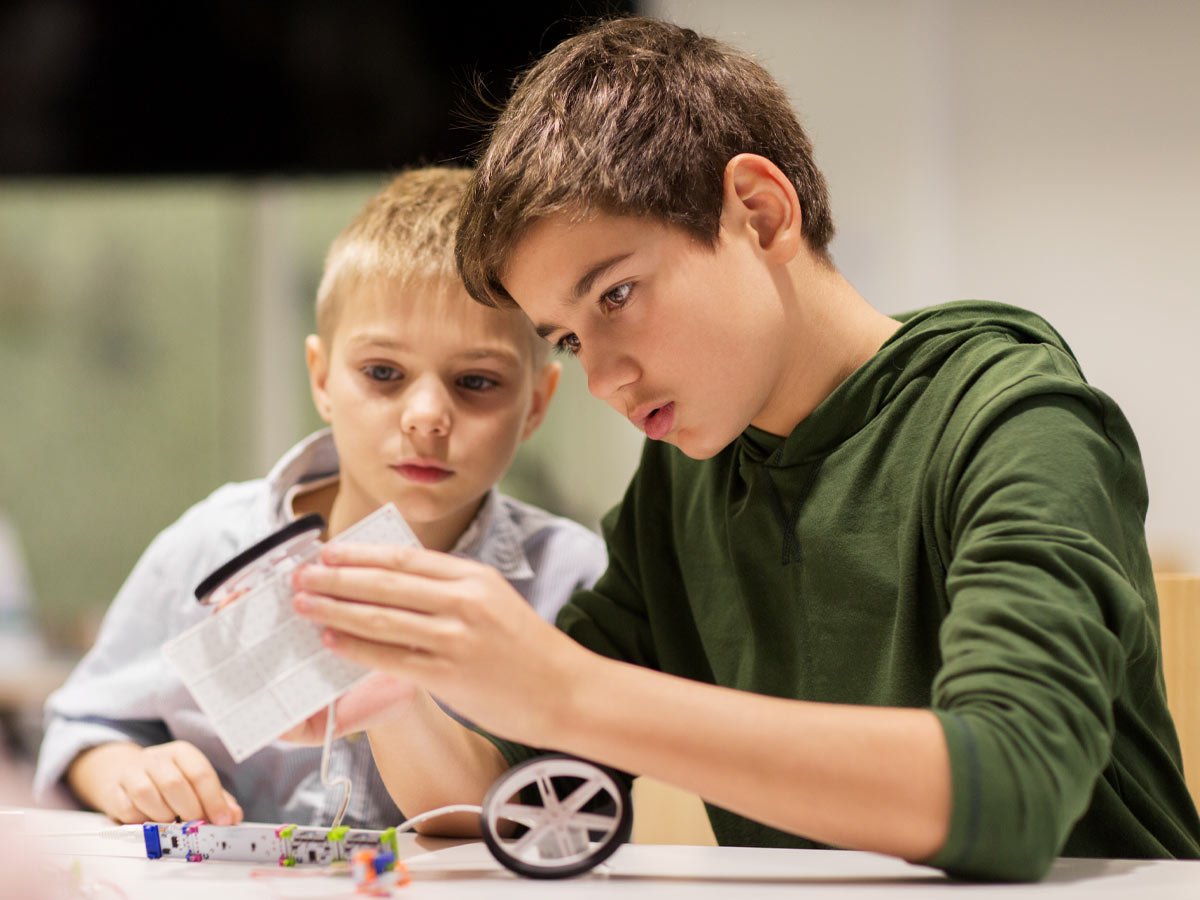
Older children often engage with loose parts through the lens of STEM challenges — using materials to build structures that meet specific requirements, testing physics principles, or creating functional objects. Providing a loose prompt rather than a fixed assignment — “Can you build something that holds weight?” or “What can you make with only these materials?” — tends to produce the most engaged and creative responses from this age group. The open-ended challenge format used in many maker spaces and STEM programs is, at its core, a structured version of loose parts play for older learners.
The High Country Advantage
Families in the High Country have access to one of the richest natural loose parts environments in the country — and most of us walk through it regularly without fully recognizing it as the developmental resource it is. Every trail walk, creek exploration, and backyard afternoon is an opportunity to gather materials that become the raw ingredients of some of the most valuable play a child can engage in.
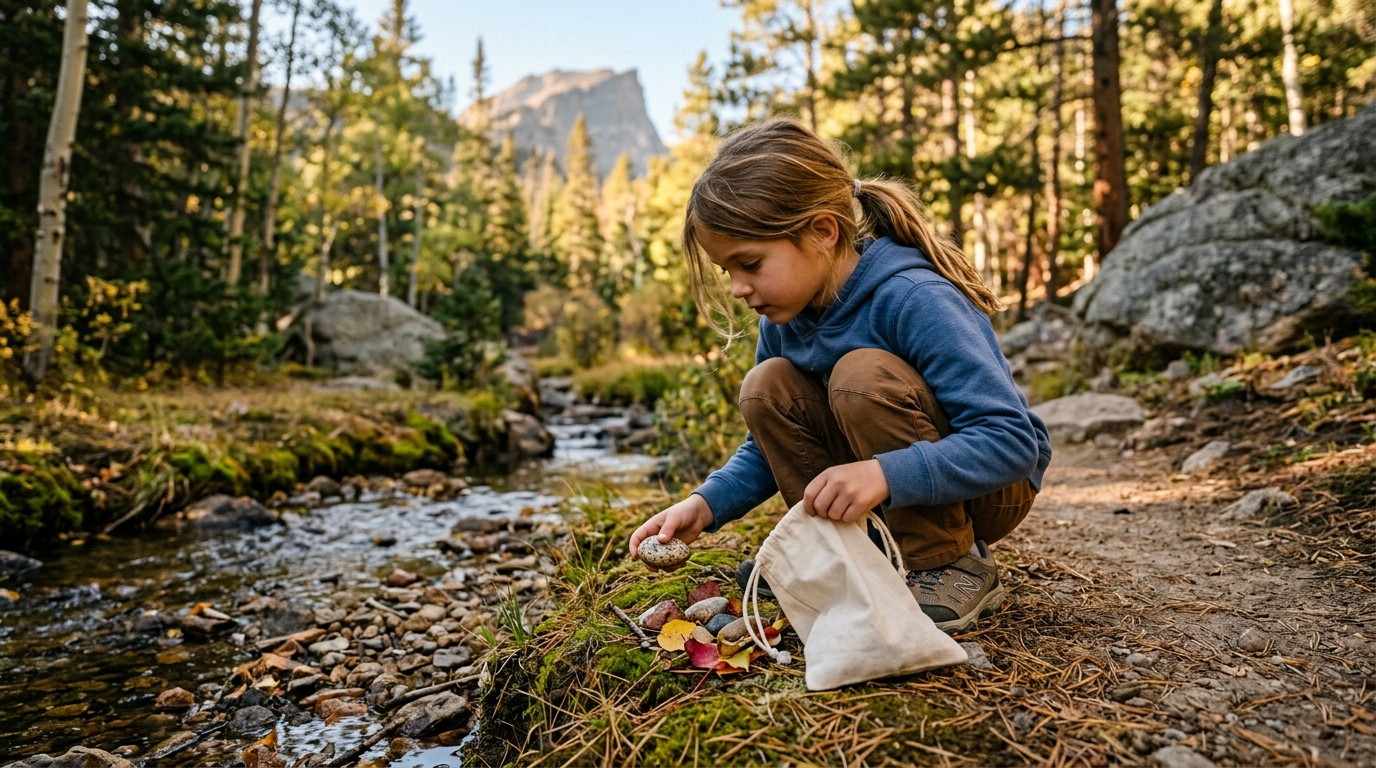
Encourage your child to collect on walks — a few smooth stones, an interesting piece of bark, a particularly good stick. Keep a small gathering bag in the car. Let the collection grow naturally over the seasons. Fall brings acorns and colorful leaves. Spring brings seed pods and new growth. Summer brings creek finds and wildflower petals. A child who has gathered their own loose parts brings a different quality of ownership and intention to playing with them than one who was handed a pre-packaged set.
If you are already embracing outdoor education and nature-based learning with your family, our guide to creating a forest school experience at home in the High Country pairs beautifully with a loose parts practice — the two approaches reinforce each other naturally, with the forest school providing the outdoor context and loose parts providing the open-ended materials that bring it alive.
Starting Simply — You Already Have Everything You Need
The most common barrier parents report to starting loose parts play is the belief that they need to source, purchase, or organize a significant collection before they can begin. They do not. You can start today with whatever is already in your home and your backyard.
Gather five smooth stones from the driveway. Pull out the cardboard box from last week’s delivery. Find a handful of buttons in the junk drawer and a few fabric scraps from an old project. Add a stick from the yard and a pinecone from the porch. Put them on a tray on the kitchen floor and step back.
Watch what happens. It will surprise you.
The child who has been asking for a new toy, who has been bored by everything in the playroom, who has been reaching for a screen out of habit — that child, given a tray of interesting objects and the freedom to decide what to do with them, will often play for longer and with more genuine engagement than any single-purpose toy has ever produced.
That is the quiet power of loose parts. And in the High Country, where the natural world offers the richest collection of open-ended materials imaginable, it is one of the most natural and fitting gifts we can offer our children. For more on why unstructured, open-ended time is so essential to your child’s development, our post on the slow childhood movement and the value of boredom and backyard play is a natural companion read — because loose parts play and slow childhood grow from exactly the same roots.