There is something that happens to children who grow up in the High Country. They learn early that the mountains are not a backdrop — they are a home. They know what it feels like to breathe clean air at elevation, to hear a creek moving fast after a spring rain, to watch the seasons change in a way that city kids simply do not. That connection to the natural world is one of the greatest gifts our corner of North Carolina gives our children. And eco-conscious parenting is, at its core, about protecting it — for them and for the generations that come after.
The good news is that raising environmentally aware kids does not require a dramatic lifestyle overhaul, a perfectly zero-waste household, or a subscription to every green product on the market. It requires intention, consistency, and the willingness to let your children see you making choices that reflect what you value. That is it. The rest follows naturally — especially in a place like the High Country, where the land itself is one of the most compelling teachers available.
Why Eco-Conscious Parenting Matters Now More Than Ever
Eco-conscious parenting has emerged as one of the defining parenting trends of 2026 — and it is not driven by guilt or ideology. It is driven by parents who want their children to grow up with a sense of responsibility toward the world they will inherit, and who recognize that the habits formed in childhood tend to last a lifetime.
Research is consistent on this point: children who develop environmental awareness early are more likely to adopt sustainable behaviors as adults. According to the American SPCC, promoting eco-awareness strengthens a child’s understanding of critical environmental issues and allows kids to appreciate the direct impact of their actions. That understanding — built through small daily habits and genuine outdoor experiences — shapes not just how they treat the planet but how they think about cause, effect, and responsibility across every area of life.
In the High Country, this is not abstract. The forests, waterways, and mountain ecosystems around us are real and present in our children’s daily lives. Teaching them to care for those places is not a lesson in distant environmental policy. It is a lesson about home.
Start at Home — Where Habits Are Built
The most durable environmental habits are the ones children absorb at home through repetition and example — not through lectures or worksheets. Parents serve as primary role models, and children learn best through observation. The green habits you demonstrate daily are the ones that take root.
Reduce Before You Recycle
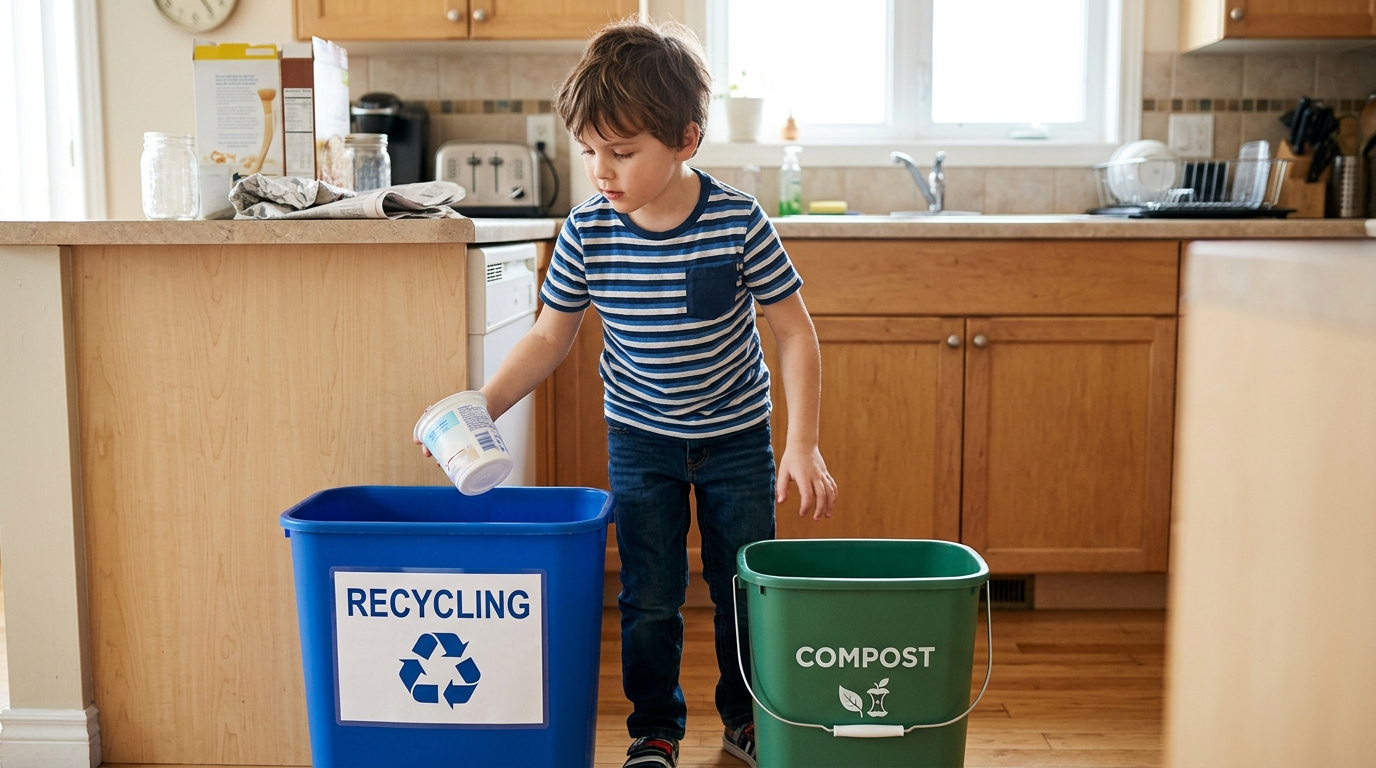
Most families know about recycling — but recycling is actually the last step in a good environmental habit loop, not the first. The most impactful approach is reducing consumption overall: buying less, choosing durable items, shopping secondhand, and repairing before replacing. Teaching children this hierarchy — refuse, reduce, reuse, then recycle — gives them a mental framework that applies far beyond sorting bins.
Start with visible, age-appropriate practices: carrying reusable water bottles and grocery bags, choosing a secondhand toy or book over a new one, fixing something instead of replacing it. Each of these is a small choice. Said out loud — “We are fixing this instead of buying a new one because we try not to waste things” — they become lessons in values, not just habits.
Composting as a Family Practice
Composting is one of the most tangible and satisfying eco-practices for children because the results are visible. Vegetable scraps and yard waste go in; rich soil comes out. For young children especially, the transformation from kitchen scraps to garden soil is genuinely magical — and it teaches something important about cycles, waste, and the way natural systems work.
A simple backyard compost bin is enough to start. Let children be responsible for taking kitchen scraps out. Let them turn the pile and check on it. When the compost is ready to use in the garden, let them be the ones who add it to the soil. The ownership they develop through that process is exactly the kind of environmental stewardship that lasts.
Energy and Water Awareness
Turning off lights, taking shorter showers, not letting the tap run while brushing teeth — these habits seem small but they matter both environmentally and educationally. Children who are taught to notice their energy and water use develop a broader awareness of resources as finite and worth caring for. Make it concrete: “When we leave lights on in empty rooms, we are using energy that comes from somewhere and costs something. We turn them off because we pay attention to what we use.”
Buy Local, Think Global
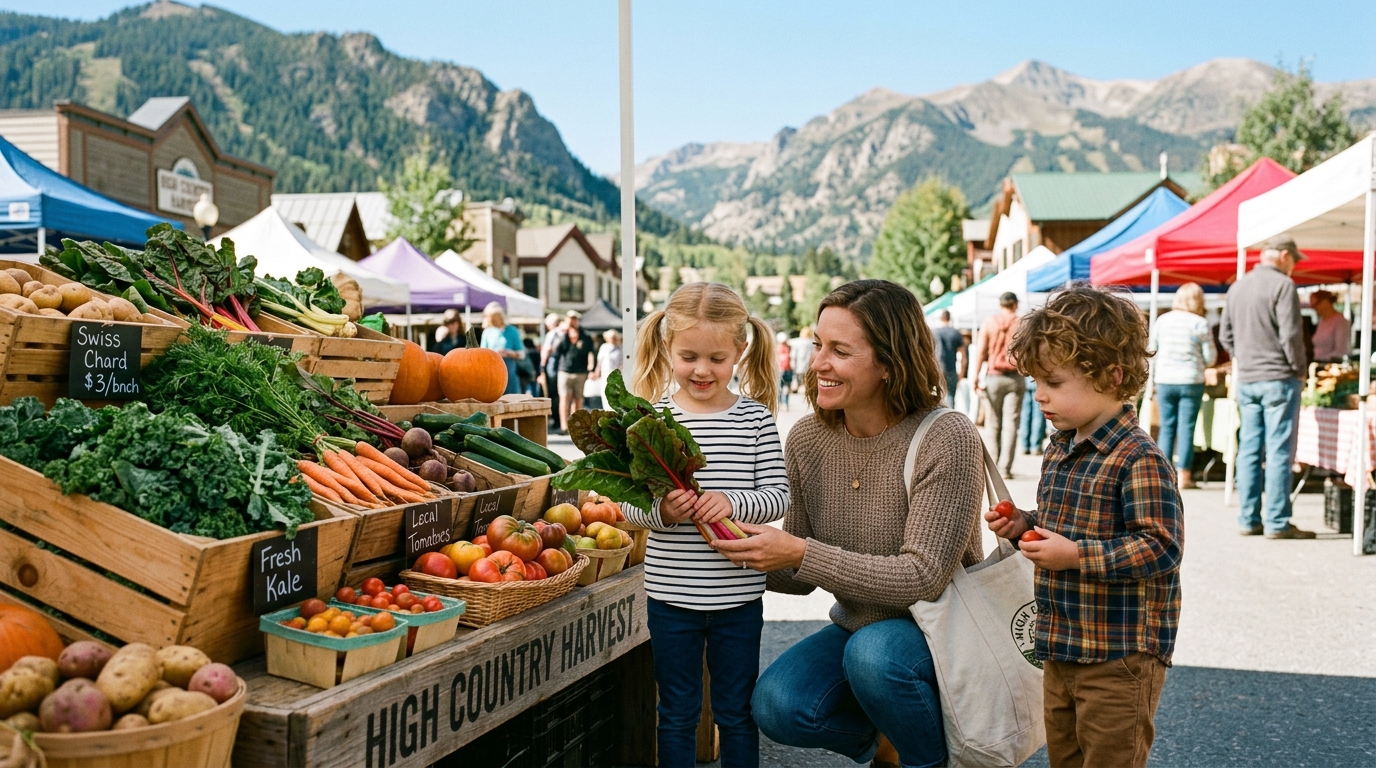
One of the most meaningful eco-conscious choices a High Country family can make is also one of the most enjoyable: buying local. Supporting local farmers, markets, and producers reduces transportation emissions, keeps money in the community, and connects children to where their food actually comes from.
The High Country Farmers Market Habit
A regular trip to the local farmers market is one of the richest eco-education experiences available to High Country families — and it is free. Let children pick out a vegetable they have never tried. Ask the farmer how something is grown. Talk about why food grown nearby uses less fuel to reach your table than food shipped across the country. These conversations are not lectures. They are the natural byproduct of being somewhere interesting with a curious child and an adult willing to wonder out loud alongside them.
The habit of choosing local — even imperfectly, even occasionally — teaches children that their purchasing choices have consequences and that those consequences can be positive. That is a powerful and durable lesson.
Secondhand First
The shift toward secondhand shopping is one of the most accessible and affordable eco-conscious choices families can make. Clothing swaps, thrift stores, library sales, and community exchange groups all offer ways to reduce consumption without sacrificing quality or fun. Involving children in secondhand shopping — letting them choose a book, toy, or item of clothing from a secondhand source — normalizes the choice and removes the social stigma that sometimes still clings to it.
Mindful consumption is a mindset, not a product category. Teaching children to cherish what they have, repair what breaks, and pass along what they no longer need is a more lasting eco-lesson than any single green purchase.
The Outdoors as Your Best Teaching Tool
In the High Country, the most powerful eco-conscious parenting tool available to families is not a product or a program. It is the land itself. Spending time outdoors — regularly, unhurriedly, with room for genuine exploration — builds the kind of nature connection that research consistently links to environmentally responsible behavior in adulthood.
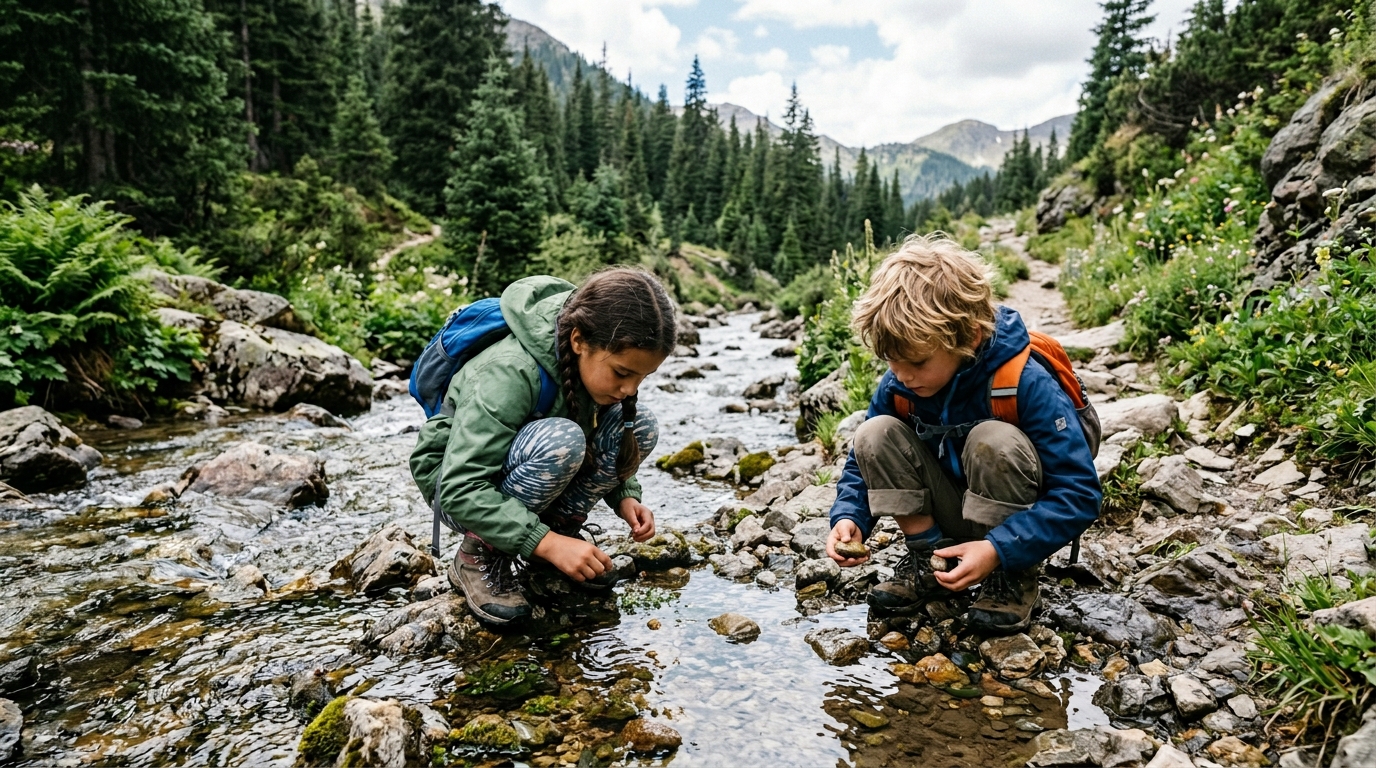
Green parenting experts emphasize that spending time outdoors is not only beneficial for physical and mental health but also fosters a deeper connection to the natural world. Children who explore trails, examine creek beds, identify birds and plants, and experience weather and seasons firsthand develop an emotional relationship with the natural world — not just an intellectual awareness of it. And children who love the natural world tend to protect it.
Nature Exploration Without an Agenda
The best nature time for building eco-consciousness is unstructured — a walk with no destination, a stretch of creek bank with no schedule, an afternoon in the backyard with nothing required. Children who are allowed to be curious in nature — to follow an insect, overturn a rock, lie in the grass and watch clouds — develop an intimacy with the living world that no classroom lesson can replicate.
Our post on the slow childhood movement and the value of unstructured outdoor time explores why that kind of unhurried nature time matters so deeply for child development — and how to protect it in a world that constantly fills the schedule.
Nature Journaling and Citizen Science
For older children and tweens, nature journaling — sketching and writing about what they observe outdoors — is a practice that deepens environmental awareness while building literacy and observation skills. Citizen science programs like iNaturalist allow children to photograph and identify plants, insects, and animals they encounter and contribute their observations to a global scientific database. The knowledge that their observations actually matter — that scientists use the data contributed by regular people walking their local trails — is deeply motivating for children at any age.
Talking to Kids About the Environment Without Creating Eco-Anxiety
One of the genuine challenges of eco-conscious parenting in 2026 is the risk of creating eco-anxiety — a real and increasingly documented phenomenon in which children experience persistent fear, grief, or helplessness about environmental issues. This is worth taking seriously. The goal of raising eco-conscious children is empowerment and agency, not despair.
Keep the Conversation Age-Appropriate
Young children do not need the full weight of climate science. They need to know that the earth is worth caring for and that their actions matter. “We recycle because we love the place we live” is more than enough for a four-year-old. For older children and teens, more complex conversations are appropriate — but always grounded in action rather than hopelessness. Every conversation about a problem should include a conversation about what your family, your community, or your child personally can do.
Focus on Agency and Connection
Research on eco-anxiety consistently shows that the antidote to environmental despair is not less information — it is more agency. Children who feel that their actions matter, who have tangible ways to contribute, and who are connected to a community of people working toward the same values are far more resilient in the face of difficult environmental realities. Gardening, composting, buying local, spending time in nature, volunteering — these are not just habits. They are acts of agency that tell a child: you are part of this, and what you do matters.
Eco-Conscious Living in the High Country — A Natural Fit
The values at the heart of eco-conscious parenting — care for the natural world, intentional consumption, connection to place, responsibility to community — are values that High Country families have long understood intuitively. We live somewhere that asks us to pay attention to the land. Our mountains and rivers and forests are not abstractions. They are the places where our children play, grow, and learn who they are.
Raising eco-conscious kids in this environment is not a project to take on. It is an extension of the life we are already living — made more intentional, more explicit, and more empowering for the children who are watching and learning from everything we do.
Start small. Start where you are. A compost bin in the backyard, a regular trip to the farmers market, an afternoon on a trail with no agenda. These are not grand gestures. They are the quiet, consistent choices that add up to a child who loves the earth and knows how to take care of it. And in the High Country, that child has one of the most beautiful classrooms in the world right outside their door.
For a practical way to connect eco-conscious values to hands-on learning this season, our guide to spring gardening with kids in the High Country gives you everything you need to get started — from seed to harvest, by age.