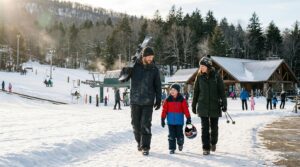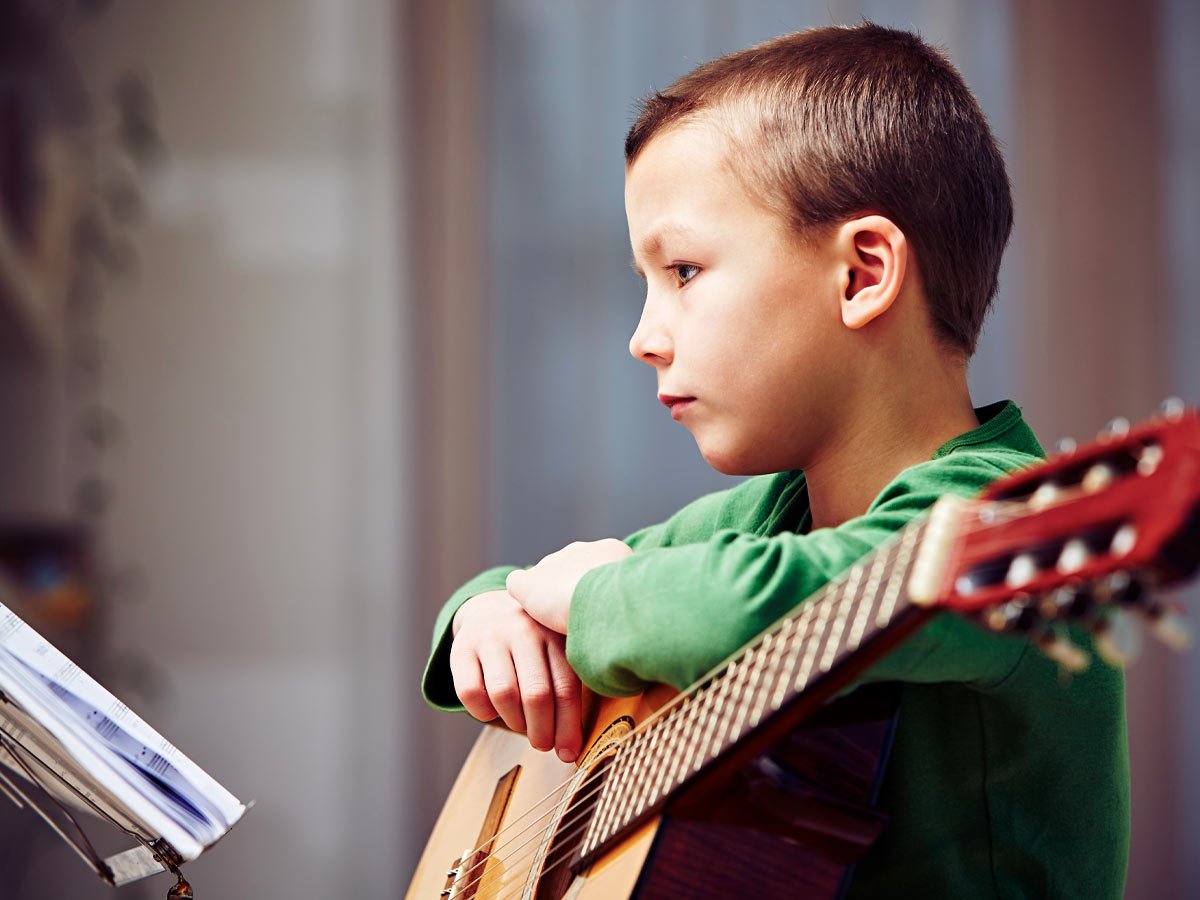
A first ski or snowboard day can become a favorite High Country family memory, but it asks more than warm coats. Beginners need the right lesson, equipment that fits, time to settle in, and permission to take breaks.
This family ski and snowboard guide for Boone, NC helps first-time families decide which sport to try, what beginner support to reserve, how to dress, and how to keep the day realistic. Always follow each resort’s current conditions, rules, and safety instructions.
Decide What a Good First Day Looks Like
A successful first day does not have to mean a chairlift, a long run, or staying until closing. For many children, success is getting comfortable in boots, meeting an instructor, practicing a stop, or asking to return another day.
Choose one small goal, such as trying a beginner lesson or taking a break when anyone is cold. This protects the day from an exhausted final hour.
Children who can follow short instructions, separate from a parent for an age-appropriate lesson, and report discomfort may be ready to try. If a child is uncertain, treat the day as an introduction, not a test.
Choose Skiing or Snowboarding Together
There is no universal easier choice. Both sports ask beginners to learn balance, turns, stopping, and unfamiliar equipment. A child’s interest matters because it helps them persist through the first awkward tries.
Match the plan to interest and eligibility
Start by asking what your child wants to try, then check age and lesson eligibility. Appalachian Ski Mountain’s children’s programs identify beginner ski instruction for ages 4 through 10 and beginner snowboard instruction for ages 7 through 12. Confirm current availability before booking.
Skis may feel familiar to a child who likes each foot moving separately. A snowboard may appeal to a child drawn to board sports. Neither choice needs to be permanent.
Let an instructor lead the first basics
Parents are great encouragers, but first-day instruction can be easier with a trained professional. Appalachian Ski Mountain’s beginner small-group lessons are for first-time and beginner skiers and snowboarders ages 6 and up, and stay on beginner terrain rather than using chairlifts. Read the current Appalachian Ski Mountain lesson details before reserving.
Compare Beginner Support Before Booking
Book the lesson and equipment plan before treating the lift ticket as the main decision. For a true beginner, instruction, proper rental fit, and beginner terrain matter most. Check each resort’s current site because schedules, age ranges, capacity, and prices can change.
Appalachian Ski Mountain options
Appalachian Ski Mountain lists online reservations as required for 2026-27, with a November 20 scheduled opening, weather permitting. Its children’s programs page describes SKIwee and Cruiser Camp as beginner programs. Build in time for rentals and follow current arrival instructions.
Beech Mountain Resort options
Beech Mountain Resort lists a Ski and Ride School for ages 4 and up, a snowboard Learn to Ride option for ages 6 through 12, and other youth choices. Its first-timer guide recommends a lesson and properly fitted rental equipment. Review current hours, tickets, rentals, and lessons before traveling.
Reserve, Rent, and Dress in the Right Order
Begin with the date and lesson, then add the lift access and rentals required for that program. Read every booking description before checkout. A lesson may not include lift access, equipment, or a beginner-area ticket. Contact the resort if the page is unclear.
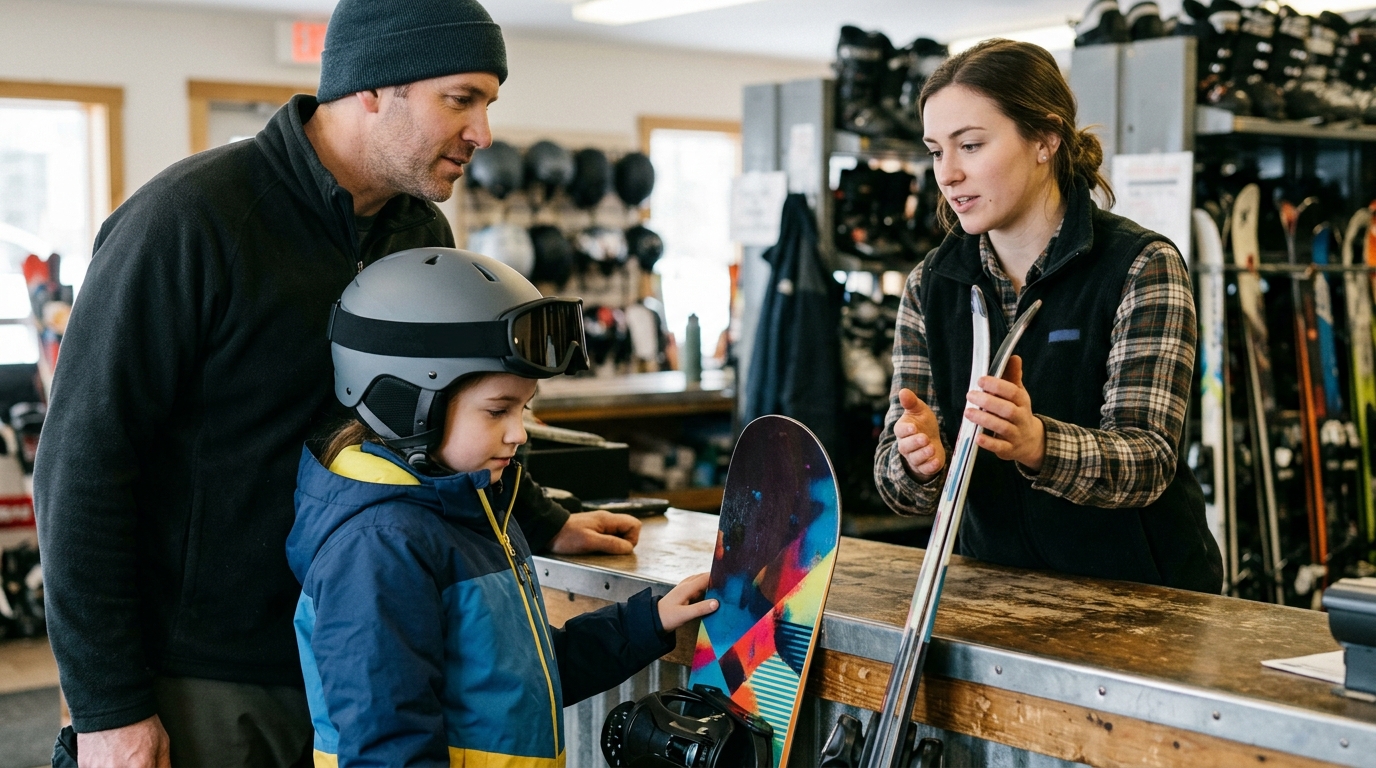
For rentals, give the fitting team accurate height, weight, shoe size, ability level, and sport choice. Encourage your child to speak up if boots pinch or the helmet does not sit securely. Let the rental professional adjust equipment.
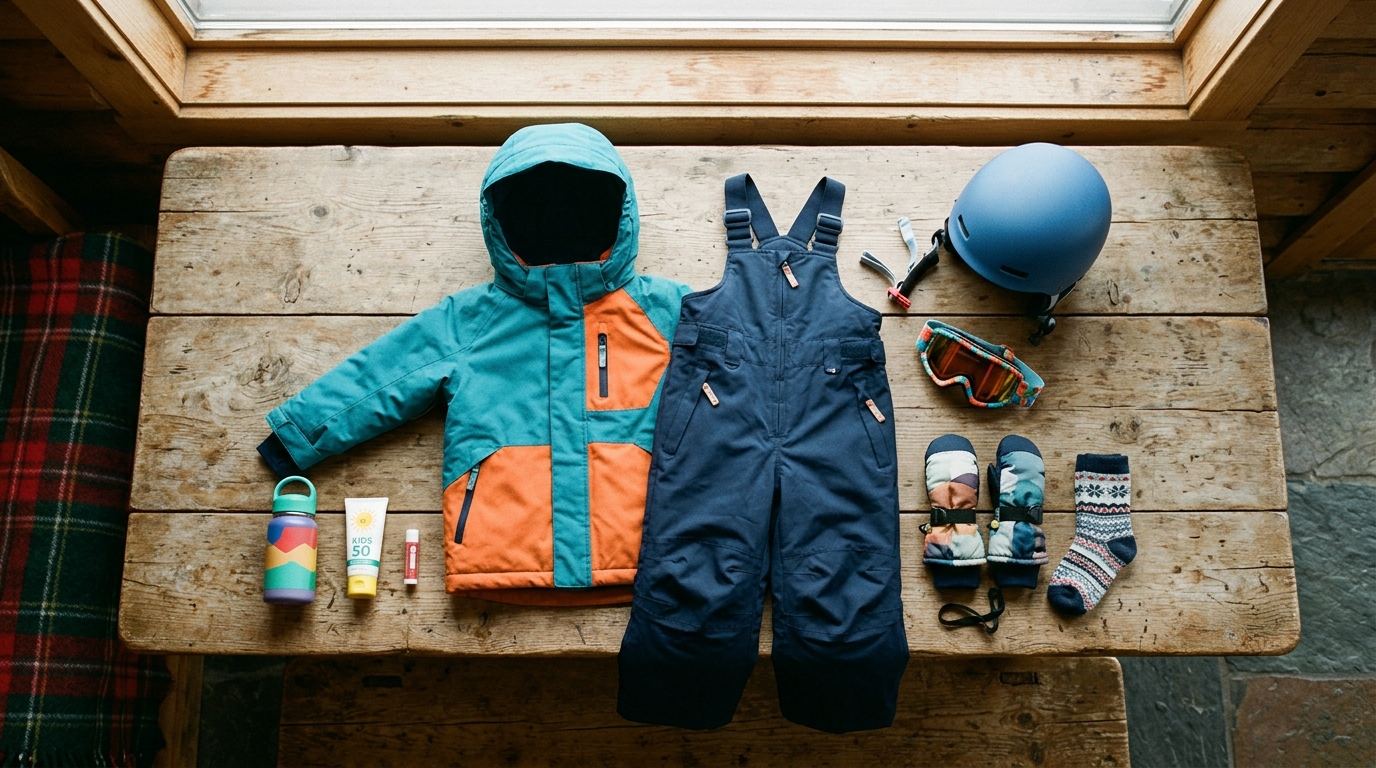
Dress for snow and repeated stops. Start with a moisture-wicking base layer, add a warm middle layer, and finish with a waterproof outer layer. Waterproof pants, warm gloves or mittens, a helmet, eye protection, sunscreen, and lip balm all help a beginner stay comfortable. Avoid cotton next to the skin because it can stay damp. The National Ski Areas Association’s kid safety tips also emphasize layers, correctly fitted helmets, eye protection, sun protection, and planned breaks.
Use a First-Day Timeline That Leaves Slack
Arrive earlier than you think you need to. Parking, tickets, rentals, boots, restrooms, and check-in take time with children. Rushing can make the first lesson stressful before anyone reaches the snow.
Confirm the meeting location, start time, pickup plan, and adult waiting area. Choose a simple reunion point and do one last comfort check: gloves, goggles, helmet, boots, and a bathroom break.
During the lesson, let your child work with the instructor. Afterward, ask “What felt easiest?” or “What do you want to practice next time?” rather than how far they went.
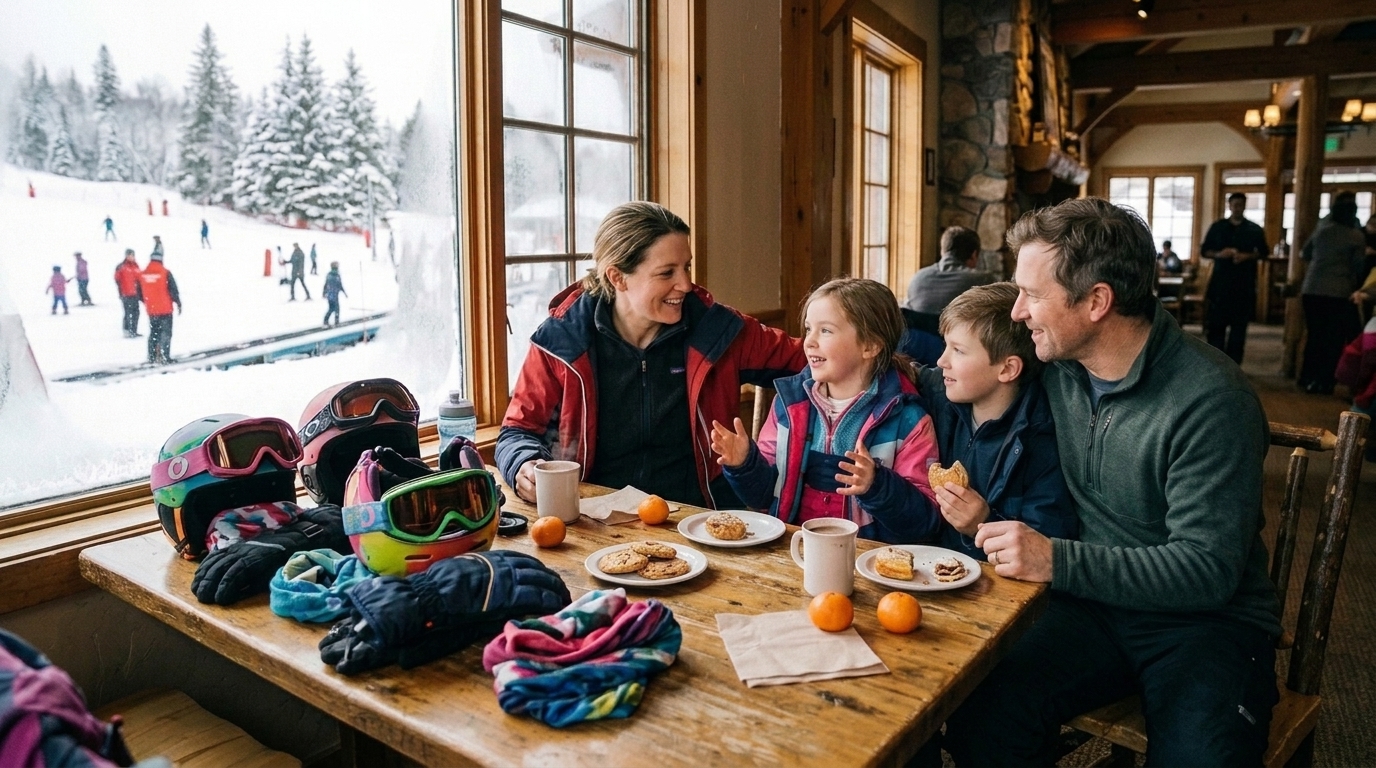
Plan a warm break for food and water. A tired, hungry, or wet child does not need to push through. If energy is good, practice only skills and terrain the instructor recommends. If not, end positively with a warm drink and talk about the favorite part.
Keep the Day Safe and Flexible
Before heading out, check current conditions, operating status, booking confirmation, and the forecast. Follow posted rules, staff direction, and current resort safety guidance.
Teach children that a helmet does not make fast or risky behavior safe. They should stop when cold, tired, hurt, or worried about equipment. Terrain choices should match their ability, not a sibling’s or friend’s confidence.
For a broader checklist that covers travel and cold-weather readiness, see our guide to preparing for winter in the High Country. If weather changes your plans, keep a simple backup in mind with these indoor activities in Boone and Blowing Rock. For families who want to build confidence before snow arrives, our article on family fitness in the mountains offers low-pressure ways to practice balance, movement, and active time together.
A first ski or snowboard day does not need to be perfect. Follow the resort’s live information, celebrate small gains, and let your child’s energy set the pace. That gives your family the best chance of ending warm, proud, and ready to return.