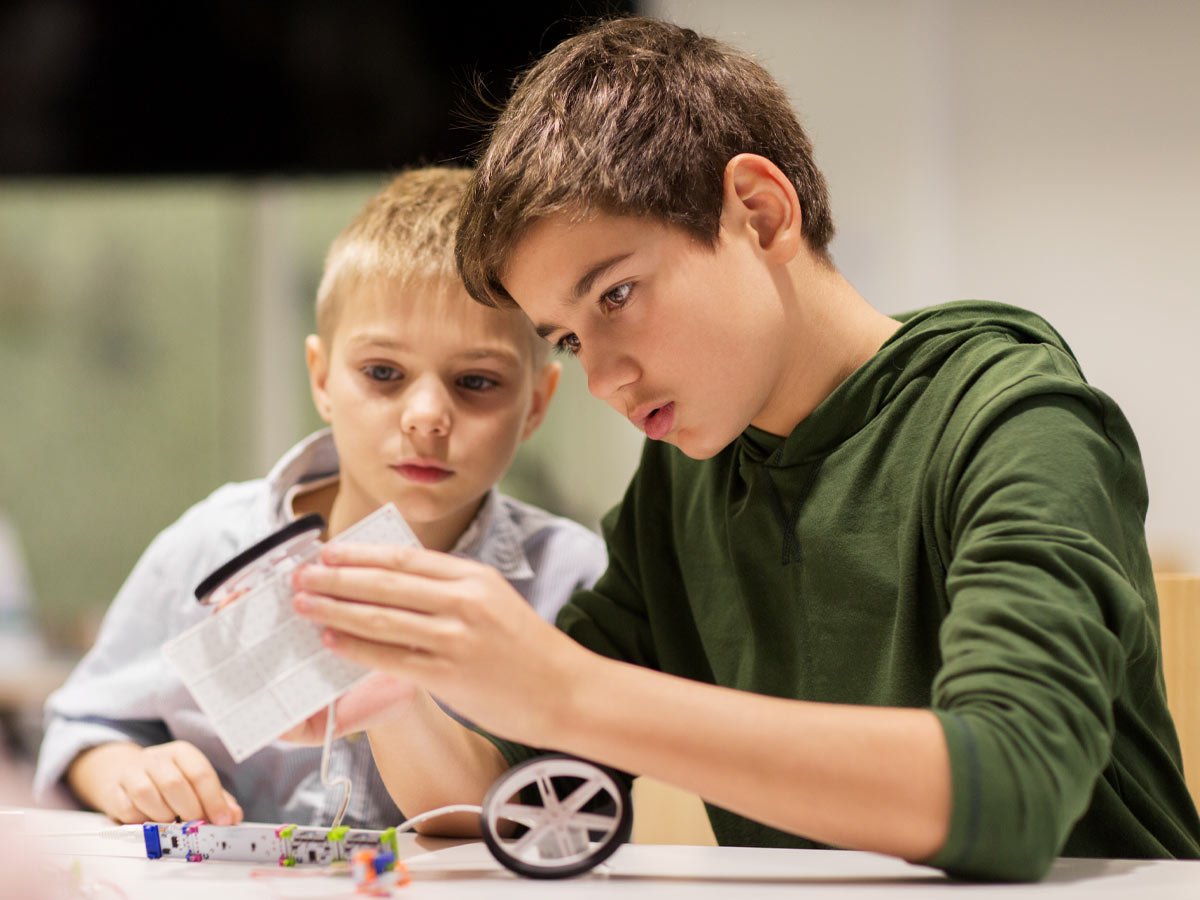
There is a moment that most moms of boys will recognize. Your son is upset — genuinely, deeply upset — and instead of being able to say what is wrong, he either shuts down completely or explodes in a way that seems out of proportion to whatever started it. You want to help. You want to reach him. But the bridge between what he is feeling and what he can say seems like it is not quite there yet.
That bridge is emotional intelligence. And for boys, building it requires something our culture has not always done well: taking their inner world as seriously as we take their outer one.
In the High Country, we raise sons who can hike a ridge, fix what is broken, and hold their own in any weather. That toughness is real and worth honoring. But the research is clear: the boys who will thrive as men — in their relationships, their work, their mental health, and their communities — are the ones who can also name what they feel, manage big emotions without shutting down or acting out, and connect genuinely with the people around them. Those skills are not soft. They are foundational. And they are built at home, starting young, one ordinary conversation at a time.
Why Boys Are Struggling — and Why It Matters Now
The mental health data on boys and young men in 2026 is hard to look away from. Boys are more likely than girls to be disciplined for emotional outbursts at school, less likely to seek help when they are struggling, and disproportionately affected by isolation, academic disengagement, and rising rates of depression and anxiety. We have covered on this blog how dramatically childhood anxiety and pediatric mental health crises have risen across the board — and boys are not immune, even when their symptoms look different from what we expect.
Part of the problem is cultural. For generations, the messages boys received about emotions were narrowing: be strong, do not cry, walk it off. Those messages did not eliminate boys’ emotions — they just drove them underground. Boys who cannot process sadness often express it as anger. Boys who cannot name fear often express it as aggression or withdrawal. The emotions do not go away. They just find other exits.
Generation Mindful puts it simply: boys are emotional beings, and we can raise a generation of emotionally healthy men by changing the way we view and accept emotional expression in boys. The boys of today become the men of tomorrow — and it starts with us as their parents making it safe to be who they are, fully.
Why Boys Need Permission to Feel
One of the most consistent findings in research on boys’ emotional development is that the messages boys receive about which emotions are acceptable shape how they process all emotions. When a boy is told not to cry, he does not stop feeling sad — he learns that sadness is shameful. When he is told to toughen up after being hurt, he does not stop hurting — he learns that pain is weakness. Over time, this emotional narrowing has real consequences.
Research from the University of Sussex found that parents who discuss emotions openly with their sons raise children who are more socially competent and more empathetic — and boys who can identify and express their feelings are less likely to act out aggressively because they have a healthy alternative for dealing with strong emotions. In other words, teaching a boy to feel is not making him softer. It is making him safer — for himself and for the people around him.
The Difference Between Feeling and Acting
One of the most useful distinctions parents can give a young boy is this: it is okay to feel whatever you feel. It is not okay to act however you want to act. This simple frame — drawn from emotion coaching research and embraced by many parents raising boys — acknowledges the full reality of a child’s inner experience while holding a firm and clear limit on behavior.
A boy who understands this distinction learns something powerful: emotions are information, not emergencies. He can feel furious at his brother without hitting him. He can feel devastated about losing a game without destroying his room. He can feel scared about starting a new school without pretending he is fine. The feeling is always valid. What he does with it is where guidance and practice come in.
Naming Emotions Is a Skill — Not a Given
Many boys — and many adults — struggle to name emotions with any precision beyond “fine,” “mad,” or “sad.” This is not a personal failing. Emotional vocabulary is a skill that is taught, practiced, and modeled. According to research from the Gottman Institute, children who learn to identify and label their emotions develop better self-regulation skills and stronger relationships throughout their lives. The process — which researchers call emotion coaching — starts with something as simple as asking a boy how something made him feel, and then actually waiting for the answer.
A feeling check-in at dinner — “What was the hardest part of your day?” — is one of the most accessible daily practices for building this vocabulary. Not every conversation needs to be deep. The habit of noticing and naming is what matters.
The Role of Male Modeling
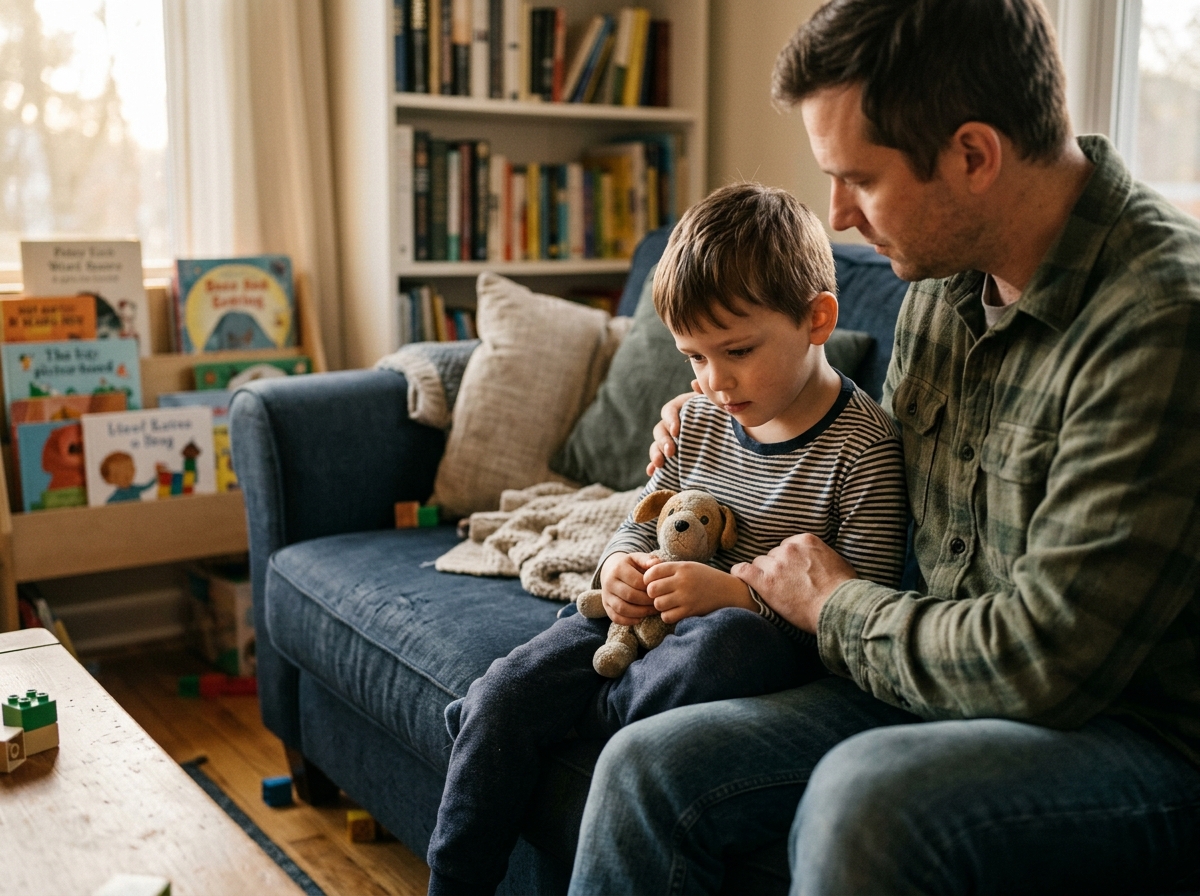
One of the most powerful things that can happen for a boy’s emotional development is watching a man — a father, an uncle, a coach, a neighbor — express emotion honestly and manage it well. Boys are watching constantly. They absorb what manhood looks like from the men in their lives far more than from anything they are told explicitly.
When a boy watches a man say “I was really frustrated earlier and I had to take a walk before I could talk about it calmly” — he learns that emotional awareness is something capable, grounded men do. When he watches a man cry at a funeral or express genuine pride or admit that something was hard — he learns that the full range of human emotion is compatible with strength and competence.
What Moms Can Do When Male Models Are Absent or Limited
In many High Country households, moms are doing much of the daily emotional work — and that is both real and meaningful. A mother’s attunement, patience, and willingness to stay in the hard conversations matters enormously. But it is also worth being intentional about connecting boys with men — in extended family, in community, in coaches and mentors — who model emotional health. This does not require a perfect father figure. It requires regular exposure to men who are honest, warm, and self-aware.
If you are raising sons in a household where you are the primary emotional guide, our post on mindful motherhood and emotional intelligence in parenting speaks directly to how to build that capacity in yourself as a foundation for building it in your children.
Practical Ways to Build Emotional Intelligence in Boys
Emotional intelligence is not a trait children either have or do not have. It is a set of skills — awareness, vocabulary, regulation, empathy — that are built incrementally through practice and relationship. Here is what that looks like in daily life with boys at different ages.
For Younger Boys — Ages 3 to 7
At this age, the goal is simply normalizing emotions — all of them — as a part of life that gets talked about rather than pushed aside. Name emotions as you see them, in your child and in yourself. “You look really frustrated right now. It makes sense — that was hard.” Read books with boy characters who experience and work through big feelings. Let your son see you acknowledge your own emotions: “I felt disappointed when that plan changed. I’m going to take a few minutes and then I’ll feel better.”
Do not rush to fix or redirect emotional moments. The willingness to sit with a child in a hard feeling — without immediately trying to make it go away — teaches him that emotions are survivable and that he does not have to manage them alone.
For Elementary-Age Boys — Ages 8 to 11
At this age, boys are increasingly influenced by peer culture — and peer culture for boys often still carries strong messages about emotional stoicism. This is the time to be direct and specific with your son about what emotional intelligence actually is and why it matters: not as softness, but as competence.
Introduce the idea that strong leaders — athletes, coaches, military figures, men your son admires — need to manage their emotions well to perform at their best. Emotional regulation is not the opposite of toughness. It is what makes toughness sustainable. When your son has a hard experience, resist the instinct to minimize it. Validate it first, then problem-solve together.
For Tweens — Ages 12 and Up
By the tween years, many boys have already developed strong habits around emotional suppression — shutting down, deflecting with humor, or getting physical when emotions feel overwhelming. Rebuilding access to emotional expression at this age takes patience and takes the pressure off.
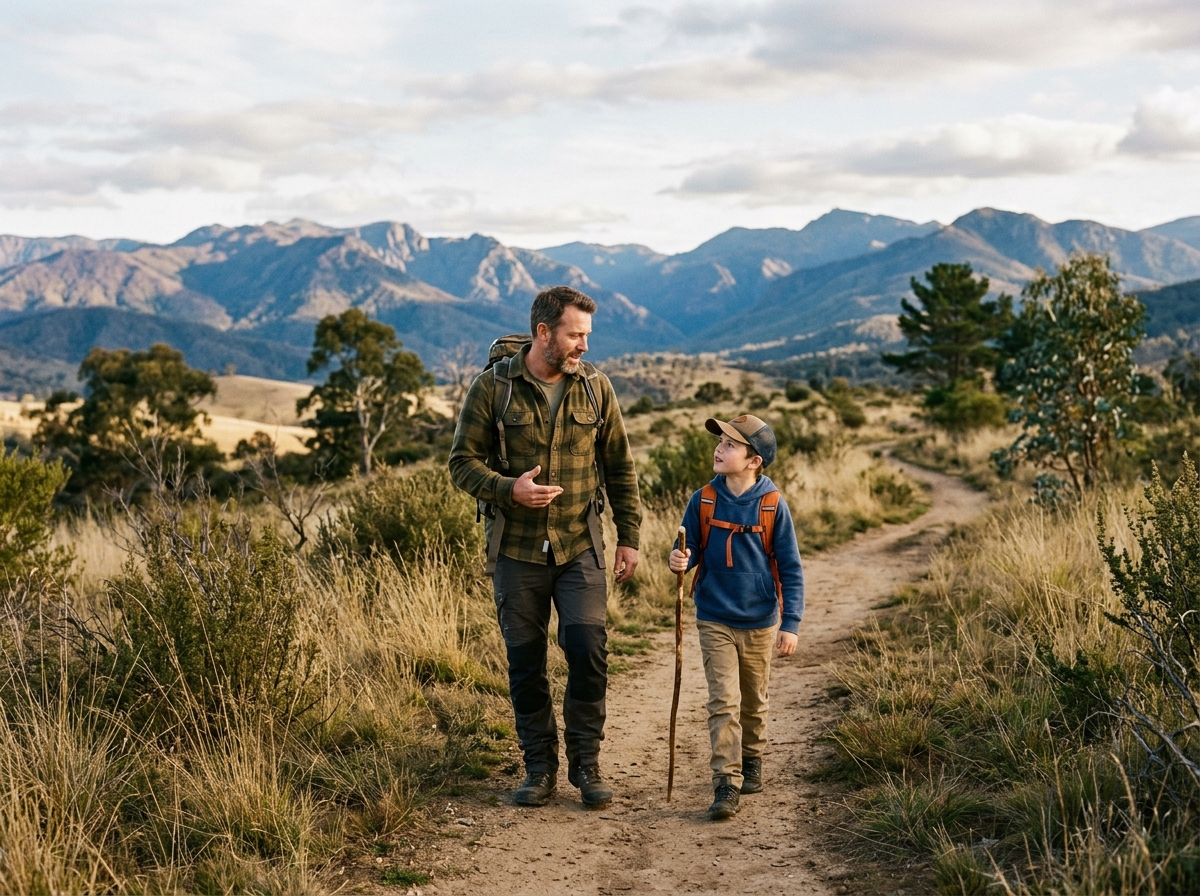
Side-by-side connection — talking while driving, walking, doing something with your hands — works better with most tweens than face-to-face emotional conversations. The absence of direct eye contact often makes it easier for boys this age to say something real. Ask open questions and resist the urge to fill silence or offer immediate advice. What your tween son needs most at this age is the experience of being heard without being judged or fixed.
What This Looks Like Day to Day
Raising an emotionally intelligent boy does not require a curriculum or a program. It requires daily, consistent small choices: the decision to ask a follow-up question instead of accepting “fine.” The willingness to acknowledge when you, as the parent, got something wrong and to repair it out loud. The choice to let your son see that having feelings is not a problem to be solved but a part of being alive.

Outdoor time — one of the High Country’s natural gifts — also plays a meaningful role. Boys who spend time in unstructured outdoor play develop better stress regulation, stronger peer relationships, and more resilience in the face of difficulty. The mountain itself is a teacher in emotional management: things do not always go as planned, conditions change, and the only way through is forward. Our post on the slow childhood movement and unstructured outdoor play explores how that kind of free time builds exactly the resilience and self-regulation that emotionally intelligent boys need.
The Long Game — Who Your Son Becomes
The work of raising emotionally intelligent boys is quiet, slow, and mostly invisible. It happens in the five-minute conversation after school. In the repair after you lost your patience. In the moment you chose to ask one more question instead of wrapping up the evening and moving on. In the way you talked about your own hard day at the dinner table.
The research is consistent across decades and disciplines: boys who grow up in homes where emotions are named, respected, and managed well become men who have stronger relationships, better mental health, greater professional success, and more meaningful lives. They are the men who know how to show up for their partners, their children, and their communities — not because they were told to, but because they learned how.
In the High Country, we have always understood something about playing the long game. We plant in the spring and wait. We build something solid and trust that it will hold. Raising emotionally intelligent boys works the same way. The conversations you are having now — imperfect as they are — are building something in your son that will last far longer than any single moment. Keep going.