There is something deeply satisfying about watching a child crack an egg for the first time, stir a pot of soup on the stove, or proudly carry a plate of food they made entirely on their own to the dinner table. Teaching kids to cook is one of the most valuable gifts you can give them — and it is also one of the biggest parenting trends of 2026. As families across the High Country embrace slower, more intentional living, the kitchen has become a place where real learning, bonding, and confidence-building happen every single day.
Whether your child is a curious toddler reaching for the mixing spoon or a teenager ready to prepare a full meal, there is always an age-appropriate way to get them involved. At High Country Mom Squad, we believe cooking together is one of the best family activities you can build into your weekly routine. This guide breaks down the kitchen skills your child can learn at every stage — so you can start wherever you are and grow from there.
Why Teaching Kids to Cook Matters More Than Ever
Cooking is far more than a household chore. It is a hands-on classroom where children practice math through measuring, explore science through heat and chemical reactions, build reading skills by following recipes, and develop fine motor coordination through chopping, stirring, and kneading. According to the Academy of Nutrition and Dietetics, getting children involved in meal preparation teaches them about nutrition and food safety while also building valuable life skills they will carry into adulthood.
Research consistently shows that children who help prepare meals are more likely to try new foods, eat more fruits and vegetables, and develop a healthier relationship with eating overall. In a world where screen time competes for every spare moment, the kitchen offers something screens simply cannot — a tangible, sensory-rich experience with an immediate and delicious reward at the end.
For High Country families, cooking together also connects children to the region’s incredible local food culture. Whether you are picking apples at a local orchard, shopping at the Watauga County Farmers Market, or harvesting herbs from your own garden, those ingredients become even more meaningful when little hands help turn them into a family meal. If your family already enjoys experiential parenting through outdoor adventures, cooking is the perfect indoor extension of that same philosophy.
Ages 2 to 3: Little Helpers in the Kitchen
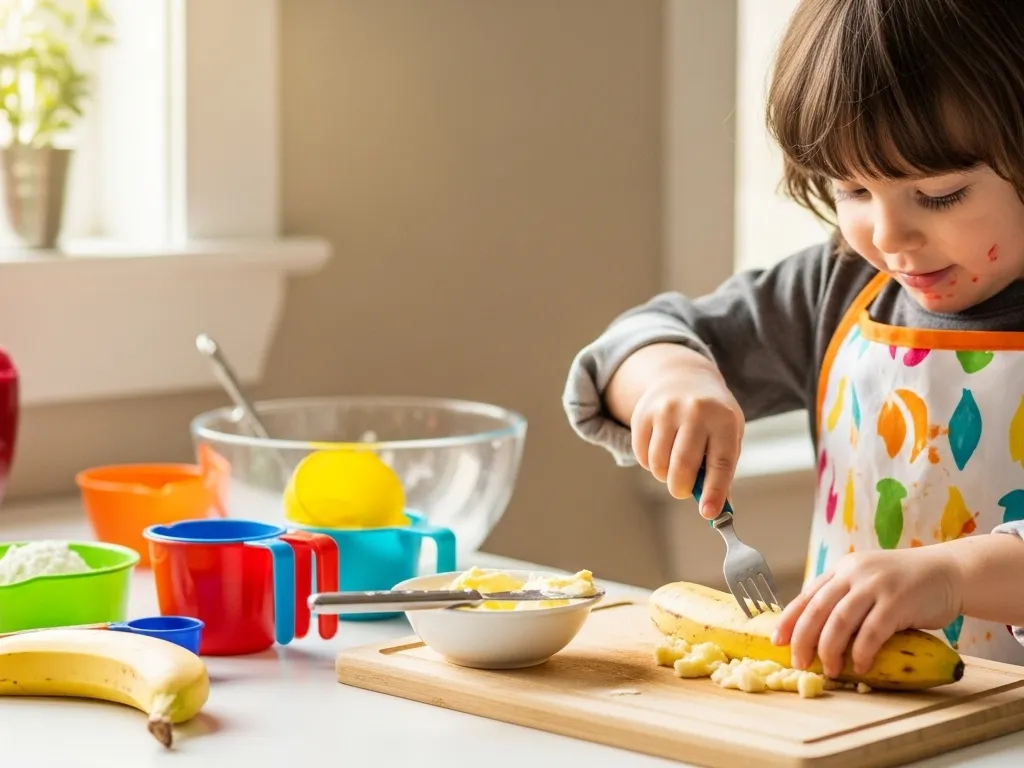
Toddlers are naturally curious and eager to imitate what they see you doing. The kitchen is a sensory wonderland for this age group. While they will need close supervision at all times, even the youngest children can participate in simple, one-step tasks that build their confidence and coordination.
At this stage, your child can wash fruits and vegetables under running water, tear lettuce leaves for a salad, stir ingredients in a bowl with a wooden spoon, scoop and pour dry ingredients like oats or flour with measuring cups, and press cookie cutters into dough. Focus on sensory exploration — let them smell spices, touch different textures, and taste safe ingredients as you go. The goal is not perfection. It is about making the kitchen a positive, welcoming space where your child feels like a valued part of the team.
Ages 4 to 5: Building Confidence with Real Tasks
Preschoolers have stronger fine motor skills and longer attention spans, which means they can take on tasks with a bit more responsibility. This is the age where children start to feel genuine pride in their contributions to a meal.
Four- and five-year-olds can spread soft ingredients like butter or cream cheese with a dull knife, mash soft foods like bananas or avocados with a fork, crack eggs into a bowl with some guidance, count and sort ingredients, help measure liquids by pouring into a measuring cup, and mix batter for pancakes, muffins, or simple breads. This is also a wonderful age to start talking about where food comes from. If your family has explored creating a fun and educational home environment, the kitchen fits perfectly into that framework as a real-world learning space.
Ages 6 to 8: Growing Independence and Real Cooking
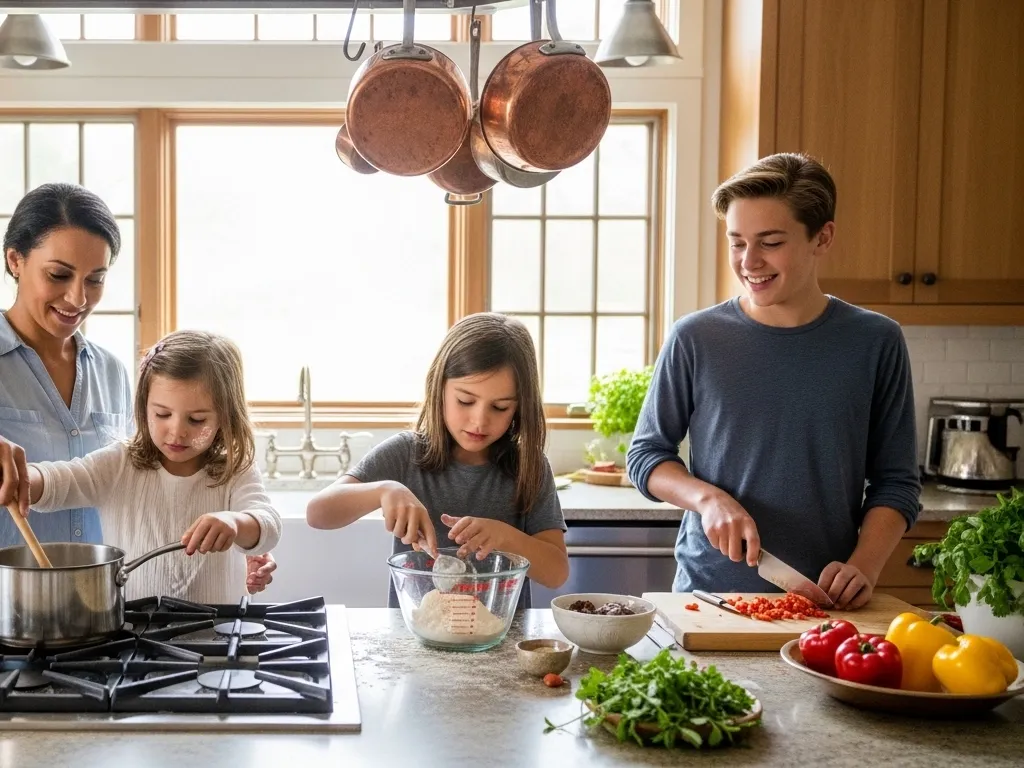
Early elementary-aged children are ready to take a much more active role in meal preparation. Their reading skills are developing, their coordination is stronger, and they are beginning to understand concepts like time, temperature, and sequence — all of which are essential in the kitchen.
Children in this age group can follow simple written recipes with assistance, use a vegetable peeler to peel carrots, potatoes, and cucumbers, grate cheese using a box grater with supervision, crack eggs cleanly and whisk them, measure ingredients independently, set timers and begin to understand cooking times, and use kid-safe knives to chop soft fruits and vegetables like strawberries, bananas, mushrooms, and bell peppers.
This is the stage where you can start assigning your child an entire component of a meal — such as making the salad, mixing the marinade, or assembling sandwiches. Giving them ownership over one part of dinner builds real accountability and pride. According to the USDA’s Kids in the Kitchen resource guide, children this age benefit enormously from hands-on food preparation experiences that combine nutrition education with practical skill-building.
Ages 9 to 12: The Confident Junior Chef
By this age, your child has likely developed the coordination, focus, and maturity to handle more complex kitchen tasks. Children between nine and twelve can work with increasing independence, though adult supervision should still be present — especially around the stove, oven, and sharp knives.
Skills appropriate for this age group include using a real chef’s knife under supervision to chop vegetables, operating the stove to boil pasta, scramble eggs, or saute vegetables, using the oven with guidance for baking, following multi-step recipes from start to finish, reading food labels and understanding basic nutrition, using a food thermometer to check whether meat is cooked to a safe temperature, and planning a simple meal from a recipe book or family favorite.
This is a wonderful time to introduce the concept of meal planning. Let your child choose one dinner per week from a cookbook or family recipe collection, write the shopping list, and lead the cooking process with you as their sous chef. The reversal of roles is empowering for kids this age and teaches planning, organization, and time management alongside the cooking itself.
Ages 13 and Up: Cooking for Real Independence
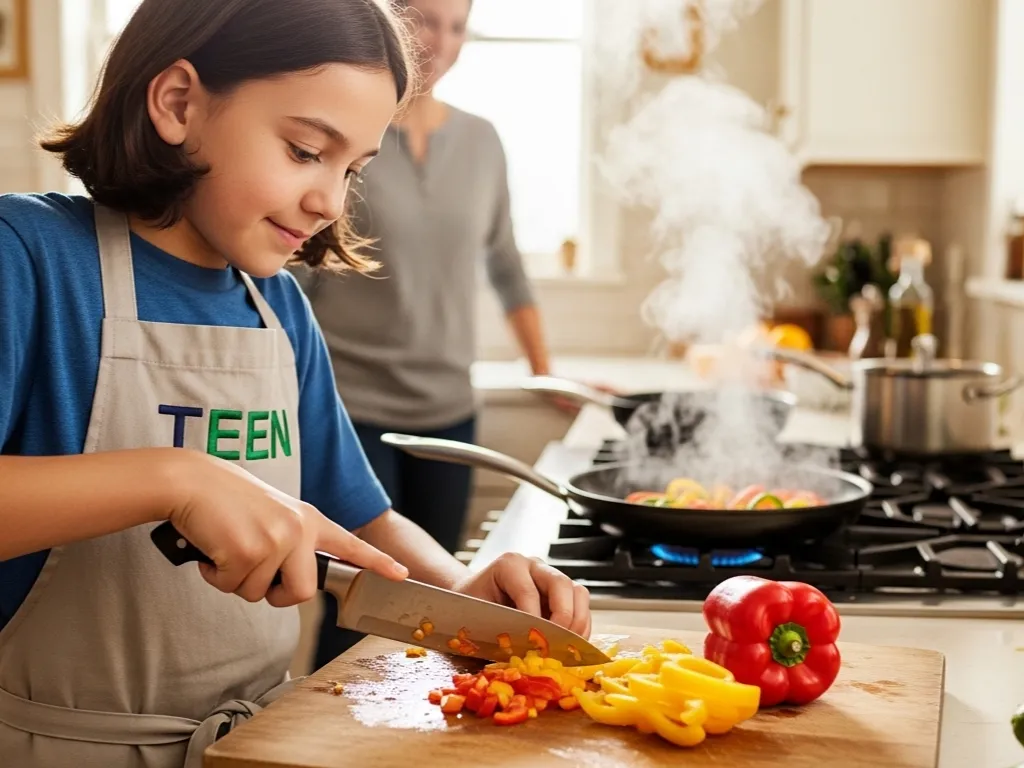
Teenagers are fully capable of preparing complete meals on their own, and this is the stage where all those years of kitchen experience come together into genuine independence. A teen who can cook is a teen who will eat better in college, save money as a young adult, and carry forward a lifelong skill that benefits their health, relationships, and confidence.
Teens can plan and execute full meals including protein, vegetables, and sides, adapt recipes based on what is available in the pantry, handle raw meat and poultry safely while understanding cross-contamination, cook with a variety of techniques including baking, roasting, grilling, and stir-frying, clean up the kitchen thoroughly after cooking, and begin experimenting with their own recipe modifications and flavor combinations.
Encourage your teenager to cook dinner for the family once a week. This is not just a chore — it is a meaningful act of contribution that builds self-esteem and connection. For families who already practice intentional quality time together, cooking side by side with your teen can be one of the best ways to stay connected during the years when conversation does not always flow as easily.
Kitchen Safety Rules Every Family Should Follow
No matter what age your child is, establishing clear safety rules from the very beginning creates a foundation of respect for the kitchen that will last a lifetime. Before any cooking session, make sure your child understands these essentials.
Hygiene Comes First
Always wash your hands with warm water and soap for at least twenty seconds before handling food and after touching raw meat, eggs, or poultry. The USDA recommends making handwashing a non-negotiable habit from the very first time your child enters the kitchen.
Sharp Tools Deserve Respect
Introduce knives gradually and always supervise. Start with kid-safe knives for younger children and move to real knives only when your child has demonstrated consistent focus and respect for the tool. Teach the claw grip for holding food, and always cut on a stable cutting board.
Heat Awareness Is Essential
Teach children that stove handles should always face inward, hot surfaces should never be touched without oven mitts, and steam from boiling water can burn just as badly as a flame. Model these habits yourself every time you cook.
Start Where You Are and Keep It Simple
If you have never cooked with your children before, there is no need to start with a complicated recipe. Begin with something simple that your family already enjoys — homemade pizza, a basic pasta dish, smoothies, or even just assembling a salad. The most important thing is to create a positive experience that makes your child want to come back to the kitchen again.
Teaching kids to cook is not about raising the next celebrity chef. It is about giving your children the tools, confidence, and independence they need to nourish themselves and the people they love for the rest of their lives. In the High Country, where families value connection, community, and the beauty of doing things together, there is no better place to start than your own kitchen.
Looking for more ideas on building meaningful family experiences? Browse our full collection of parenting tips and family activities for inspiration you can use every week.