There is a particular kind of wonder that happens when a child pushes a seed into the earth, waters it faithfully for two weeks, and then discovers a green shoot poking up through the soil. It is quiet. It is slow. And it is one of the most powerful experiences a childhood can include.
Spring in the High Country arrives on its own schedule — cool mornings that linger into May, frost dates that differ by elevation, and a growing season that rewards patience and local knowledge. But that is exactly what makes gardening here such a rich experience to share with your kids. The mountains teach what no classroom can: that growth takes time, that conditions matter, and that the effort you put into the soil comes back to you in ways you did not expect.
Whether you have a backyard plot, a few raised beds, or a collection of containers on a porch, this age-by-age planting guide will help you get your High Country family into the garden this spring — and make it an experience your kids actually want to repeat.
Why Gardening with Kids Is Worth the Mess
Gardening is one of those activities that looks like play from the outside but is doing serious developmental work on the inside. Research on the benefits of gardening for children consistently points to improvements in physical development, emotional regulation, responsibility, and even willingness to eat vegetables. When children grow their own food — from seed to harvest — they are far more likely to try it, enjoy it, and ask for it again.
There are also benefits that go beyond the individual child. Gardening is one of the few activities that naturally slows the whole family down. There is no rushing a seedling. There is no shortcut to a ripe tomato. The garden imposes the kind of patient, present engagement that is increasingly rare in a world of instant results — and children absorb that lesson through their hands and their waiting, not through any explanation.
The Outdoor Learning Connection
For High Country families already drawn to outdoor education and nature-based learning, the garden is a natural extension of the same values. Soil science, plant biology, weather patterns, pollinator ecology, the water cycle — all of it is alive and tangible in a garden bed in a way it never is on a worksheet. If you have already explored outdoor learning with your kids, our post on creating a forest school experience at home in the High Country pairs beautifully with a family garden as a complementary hands-on curriculum.
Understanding the High Country Growing Season
Before you plant, it helps to understand what makes our corner of North Carolina unique. Elevations in the High Country range from around 1,500 feet to over 5,000 feet, and that variation matters significantly for frost dates, soil temperature, and which crops thrive. As a general rule, last frost in the High Country falls between late April and mid-May depending on elevation, with higher elevations running later. This means that while valley families may be direct-sowing warm-season crops in April, families at higher elevations may need to wait until late May or start warm-season seeds indoors.
Cool-season crops — lettuce, spinach, kale, peas, radishes, and broccoli — are excellent spring starters for High Country gardens because they tolerate light frost and actually prefer cooler soil temperatures. These are also some of the fastest-growing, most satisfying crops for young gardeners who need visible results to stay engaged.
Gardening by Age: What Kids Can Do and What They Love
The key to a successful family garden is matching the task to the child. A toddler handed a tiny rake and a patch of dirt will be happy for an hour. A twelve-year-old handed the same thing will feel patronized. Getting the fit right makes gardening feel like genuine participation — and genuine participation is what builds lasting interest.
Toddlers and Preschoolers — Ages 2 to 5
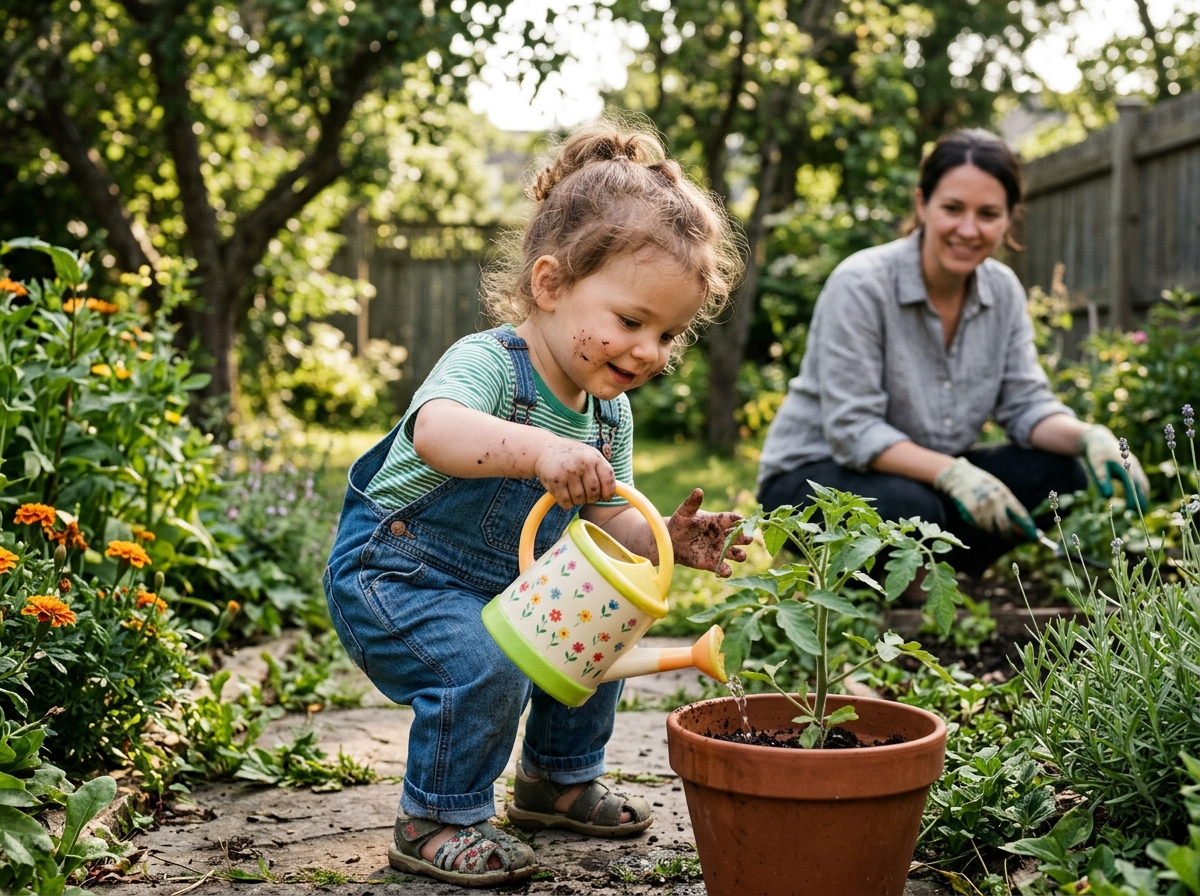
At this age, the goal is not productivity. It is exposure, sensory experience, and the simple joy of being outside with you doing something purposeful. Toddlers are hardwired to explore with their hands, and the garden is one of the few places where that instinct is entirely welcome.
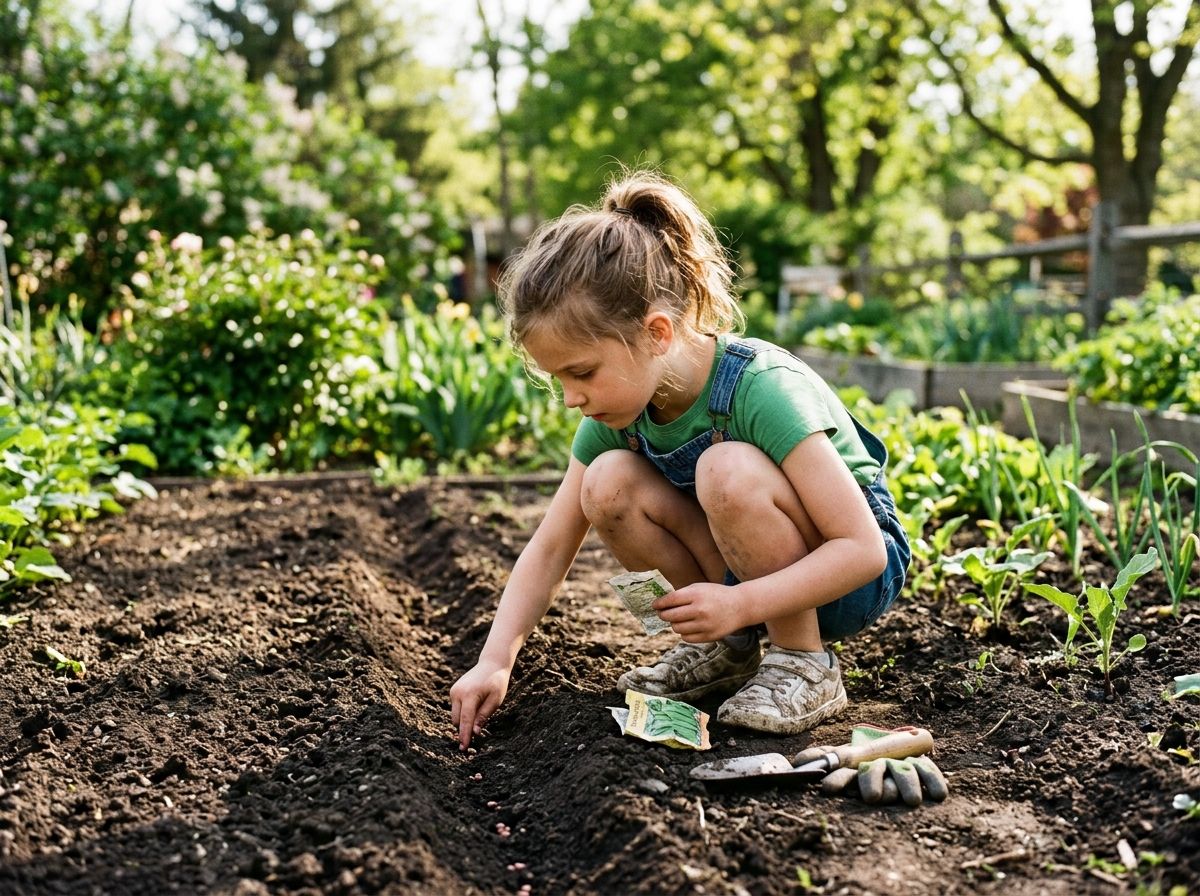
The most appropriate tasks for this age group are ones that involve handling large objects, digging, and watering — all activities that are satisfying, low-risk, and easy to redirect when needed. Large seeds are ideal for small hands: peas, sunflowers, beans, corn, and nasturtiums are all easy to grip, quick to germinate, and forgiving of imprecise placement. Let your toddler push seeds into a pre-dug hole and cover them with dirt. That simple act — I put this here and something will grow — is genuinely magical at this age.
A child-sized watering can is one of the best garden investments for this stage. Yes, they will water the same spot seventeen times and probably themselves. That is fine. The point is the ritual, the ownership, and the daily connection to something living that depends on their attention.
Best plants for this age: Sunflowers, peas, nasturtiums, pumpkins, cherry tomatoes (started indoors first), and marigolds.
Early Elementary — Ages 6 to 9
This is the age when gardening gets genuinely interesting. Children in this range can read seed packets, make real choices about what to plant, help design the garden layout, and take on more sustained responsibility for a section of the garden that is genuinely theirs. The key phrase here is their own. A six-year-old who has been given ownership of a three-square-foot plot — to plant whatever they chose, tend on their own schedule, and harvest when it is ready — will invest in that plot in a way they never would in a shared project they did not choose.
Rutgers University’s cooperative extension guidance on gardening by age recommends encouraging elementary-age children to look through seed catalogues, select a favorite fruit or vegetable to grow, and help start seedlings from scratch. Marigolds and zinnias are particularly satisfying at this age because they are easy to start from seed, grow quickly, and produce dramatic, colorful results that feel like a real achievement.
For edible crops, radishes are the gold standard for impatient gardeners — they are harvest-ready in as few as 25 days, which is fast enough to hold a child’s interest through the entire cycle. Snap peas are another excellent choice: they grow quickly, can be eaten straight off the vine, and teach the satisfaction of harvesting your own food in its simplest, most immediate form.
Best plants for this age: Radishes, snap peas, lettuce, marigolds, zinnias, green beans, and strawberries.
Good tasks: Reading seed packets, starting seeds indoors, transplanting seedlings, basic weeding, harvesting, and designing their own small plot.
Tweens — Ages 10 to 13
Tweens can handle the full arc of a garden project — from planning to harvest — with meaningful independence. This age group is ready for more complex growing challenges, longer-term projects, and the kind of real responsibility that comes with managing a garden bed that the family is actually counting on for food.
Consider giving a tween full ownership of one raised bed or a significant portion of the garden with a clear purpose: growing the salad ingredients for summer dinners, tending a pollinator garden for bees and butterflies, or starting a small herb garden that supplies the kitchen through summer. These goal-oriented projects connect gardening to something larger than a single plant and give the tween a sense of genuine contribution to the household.
At this age, the science of gardening becomes genuinely interesting. Soil composition, companion planting, composting, the role of pollinators, and the principles of succession planting — these are all topics that can deepen a tween’s engagement well beyond watering and weeding.
Best plants for this age: Tomatoes, cucumbers, peppers, herbs, kale, garlic, and flowers specifically chosen to attract pollinators like bees and butterflies.
Good tasks: Full garden planning and design, seed starting from scratch, composting, pest identification, harvest tracking, and cooking with what they grew.
Getting Started: High Country Spring Planting Basics
You do not need a large space or a significant investment to start a meaningful family garden. A few raised beds, a collection of containers, or even a single sunny window box can give your children a genuine growing experience this spring.
Start Seeds Indoors When Necessary
Because the High Country’s last frost date runs later than much of the state, warm-season crops like tomatoes, peppers, and cucumbers need a head start indoors. Starting seeds indoors 6 to 8 weeks before your expected last frost date is a worthwhile project that gives children visibility into the earliest stage of plant growth — the germination process that usually happens underground and out of sight.
A seed-starting setup does not need to be elaborate: small trays or recycled containers, a good seed-starting mix, and a sunny south-facing window or an inexpensive grow light are enough to get tomatoes and peppers started well before the soil outside is warm enough to receive them.
Build Healthy Soil First
High Country soils vary significantly, and many backyard soils benefit from amendment before planting. Adding compost — whether homemade or purchased — improves soil structure, drainage, and fertility in ways that directly impact how well plants grow. Involving children in the composting process is its own learning experience: the idea that kitchen scraps and yard waste can become the richest material in the garden is one of those genuinely surprising truths that tends to stick with kids.
Choose Crops the Family Will Actually Eat
The fastest way to lose a young gardener’s interest is to spend a whole season growing something nobody wants to eat. Let each child choose at least one crop they are genuinely excited about — even if it is cherry tomatoes they are going to eat directly from the vine before they ever make it to the kitchen. Connection to the food comes first. Versatility can come later.
From Seed to Table — Closing the Loop
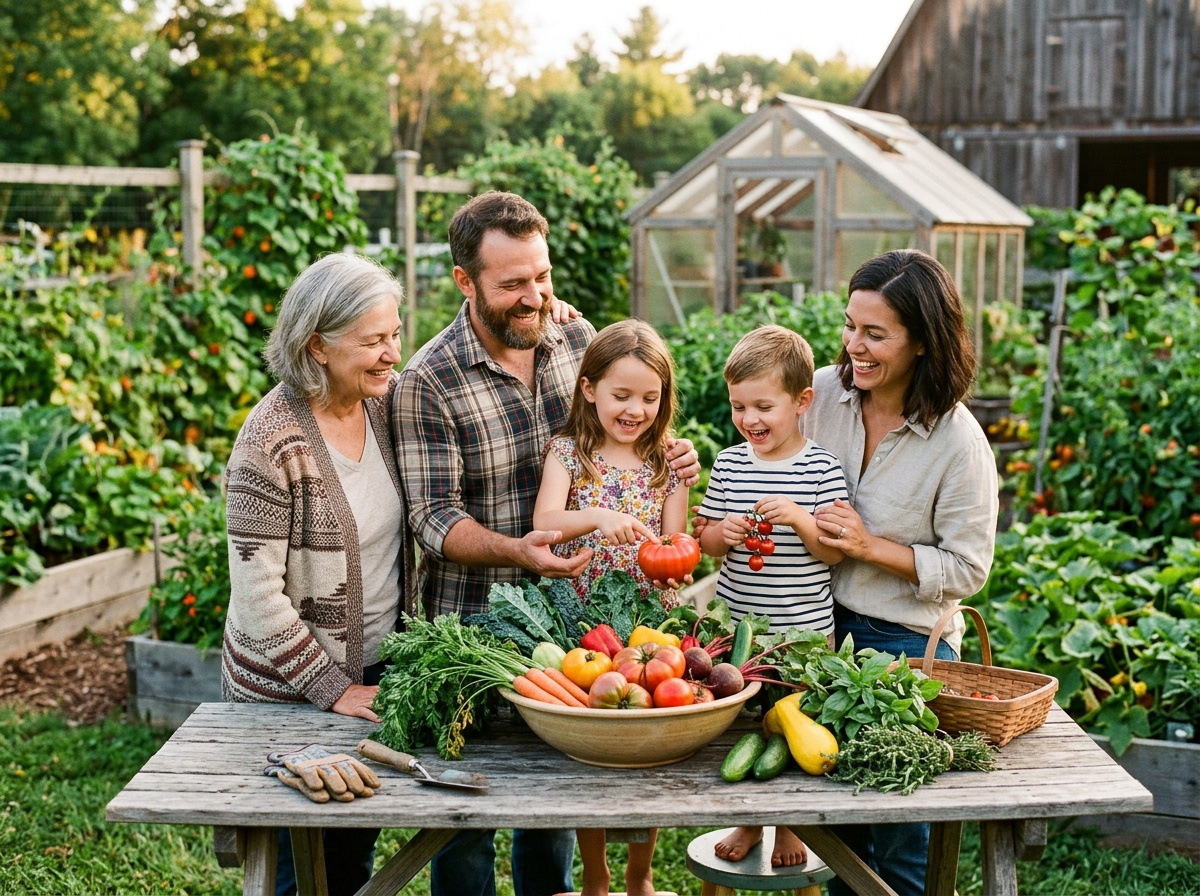
One of the most powerful things about a family garden is what happens when the harvest comes in. A child who has planted, watered, weeded, and waited for a vegetable is a child who is almost always willing to try it. Good Dads captures this beautifully with the story of a child who refused kale from the grocery store but eagerly harvested and ate “dinosaur kale” from a plant he had grown himself. The garden changes the relationship between a child and their food in a way that no amount of coaxing at the dinner table can replicate.
Closing the loop from seed to table — cooking together with what the garden produced — is worth making a deliberate ritual. If your family is also building kitchen skills alongside garden skills, our guide to raising kids who can cook is a natural companion to this one. A child who grew the tomatoes and can also make the sauce has learned something about food, work, and patience that will stay with them for life.
The Bigger Picture — What the Garden Teaches
Gardening is not really about plants. It is about what plants teach. Patience, because nothing grows on demand. Responsibility, because living things die if you forget them. Resilience, because not every seed sprouts and not every crop makes it. Gratitude, because the tomato you grew yourself and ate warm off the vine is one of the best things you have ever tasted.
These are the lessons the High Country has always offered — in its mountains, its seasons, its insistence on its own pace regardless of what anyone planned. The garden is simply a smaller, more manageable version of the same classroom.
This spring, dig in. Give your kids a patch of soil and the right plants for their age and temperament. Step back more than you think you should. Let them water too much and plant too close together and discover for themselves what works. The learning that happens in the mess and the waiting is the learning that lasts.